

U.S. Programs Are Approaching ‘The Middle’ of Their Movement. Now What?
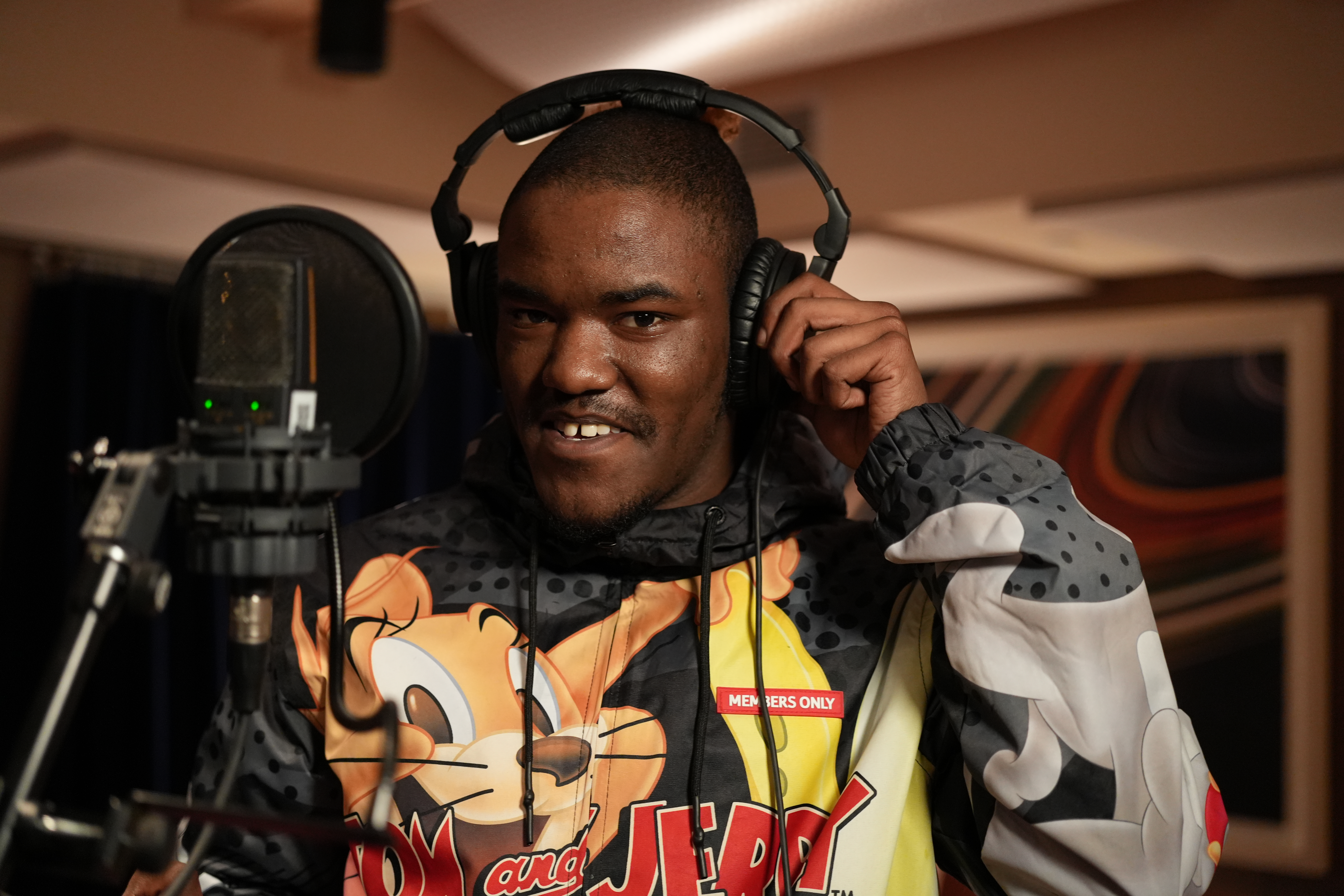
A Boston Music Project student records their own music. Photo: BMP.
There are seasons in any movement. The beginning, that electric moment when a new idea catches fire, is unforgettable. So is the end, when a movement gains a permanent foothold in society. But the middle—the developing stage—is different. The middle is where the path is no longer clear, where both the just cause and the strategies for seeing it through are tested. It’s my impression that, in many places of the world, El Sistema-inspired programs find themselves in that adolescent stage.
These growing years are critical to our future as a movement—just as the adolescent years are critical to our students’ growth. Here are a few discoveries being made by U.S. programs I’m familiar with, shared with the hope that they resonate with programs around the world.
Meeting students where they are
Fifteen years ago, many of us modeled our programs on the electricity of the Simón Bolívar Youth Orchestra and Gustavo Dudamel conducting Leonard Bernstein’s “Mambo.” But anyone who has visited a núcleo in Venezuela knows that it’s not all Bernstein and Mahler. You’ll hear traditional Venezuelan harp and cuatro ensembles. The brass and winds are running jazz and big band charts. All of this music is idiomatic to the community it serves and inspired by music-making around the world.
Some U.S. programs are following that instinct, finding their own ways to shape music projects that are meaningful to their communities. At Boston Music Project (BMP) in Massachusetts, where I work, middle school and high school youth work alongside teaching artists to produce their own original music that infuses English Language Arts and Social Studies content into the music-making itself. This deepens their connection to public school core curricula as they develop the skills to express their ideas through music. The project, titled “Art. Music. And the rest is History,” also offers them practical knowledge of digital production, streaming platforms, and live sound engineering. (Listen to a few powerful examples on our YouTube Music page.)
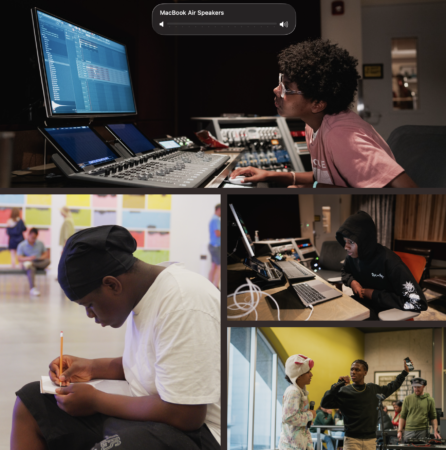
The project was first conceived at the Melvin H. King (MHK) School, a community that asks a lot of its students. They walk through metal detectors on their way inside each morning, and school officers and interventionists are a familiar presence. Attendance and engagement can be a struggle. “Music class is the reason a lot of these students show up to school,” says BMP Teaching Artist Scott Ziegler. “They lead the creative process. I teach them a few new tricks along the way, but really, our time together is about them fully expressing themselves through music.
After five years of refining this approach, the project has taken on a life of its own, inspiring entire school celebrations built around creativity, artistic expression, and community connection. It may not be a 100-piece symphony orchestra, but the joy in their smiles, as they finish recording a verse over a beat they produced themselves, is unmistakable. It’s what José Antonio Abreu referred to as “an affluence of spirit.”
Codifying leadership and career pathways
Programs including OrchKids in Baltimore, Maryland, and CHIME in Schenectady, New York, and Boston Music Project are also exploring paths to community relevance, investing in sequential leadership and career pathways for their young people and introducing financial literacy, paid teaching artist roles, and on-ramps to careers in the creative economy. From the outside, these initiatives can look administratively heavy, but the leaders running them will almost always tell you they started small, with an alumna helping out in a Tuesday sectional, a high school senior running warm-ups, or a modest stipend that became a job description a year later.
“Student voice, agency, and shared leadership are embedded in the learning experience,” says CHIME Director Zoe Auerbach. “Over time, we see students move from participants to ensemble leaders and peer mentors; from there, some serve as paid teaching assistants while others pursue social media internships or serve as student board representatives. By high school, many are engaging in broader leadership and advocacy roles beyond our program. Some of our most impactful community initiatives have grown out of our students’ curiosity, exploration, and advocacy.”
Many of us are already doing versions of this. The important next step is to name it, structure it, and make it visible to the young people we serve.
Partnerships, because we can’t do it all
As sustainable funding continues to pose challenges, more U.S. programs are leaning into partnerships that support children beyond the music room. Patrick Slevin, Executive Director of Austin Soundwaves, says it best: “We can’t do it all.” For Austin Soundwaves, that conviction shows up in how they build programs to outlast their own involvement. Rather than carry every site indefinitely, they partner with schools to plan, fund, and eventually own their music programs outright. For instance, a seven-year collaboration with Austin Achieve Public Schools grew into a fully in-school, vertically-aligned K-12 system, with the school district ultimately hiring its own music teachers so the program no longer depends on annual philanthropy.
Says Slevin, “Our goal is to make ourselves unnecessary at one site so we can go build the next one. But we don’t disconnect entirely. Once a school partner is able to directly hire its own music staff, we often continue supporting the program through private lessons, sectionals, and connections to advanced music opportunities outside of school.”
The affluence of spirit, fifteen years in
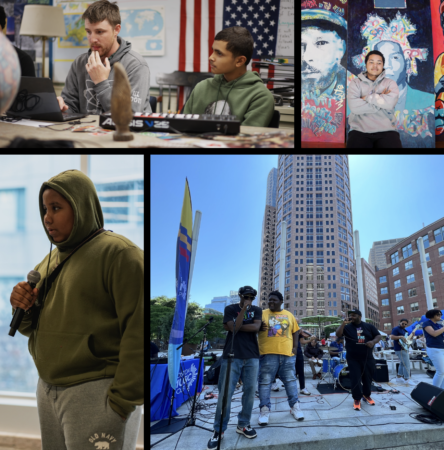
The example of El Sistema has given artists and educators permission to think differently about the role music can play in young people’s lives, and about how we might help build careers and reshape education and artistry for the 21st century. So what does that affluence of spirit look like for you today? What are the new ways you are challenging yourself and your community, as your program moves through its teenage years?
We’re all in the middle period. The path isn’t clear. That’s the challenge of this season, and also the excitement of it. Tocar y luchar—to play, to fight—is no longer just a slogan from a Caracas rehearsal room. It’s also the daily practice of growing up alongside the students in our charge, and trusting that the next chapter is something we’ll write together.
Contenido relacionado
América del Norte, Opinión, Enseñanza y aprendizaje, el conjunto
Musicoterapia y Sistema
Patrick Scafidi

Eventos/Espectáculos, Reunirse, América del Norte, Enseñanza y aprendizaje, el conjunto
Los Grandes Lagos El Sistema Seminario
Patrick Scafidi
África, Asia, Europa, América Latina, América del Norte, Repertorio, Investigación, Enseñanza y aprendizaje, el conjunto mundial
El punto más concurrido del Sistema Globe
Patrick Scafidi

América del Norte, Opinión, Investigación, el conjunto del mundo
La vuelta al mundo del Sistema con Hannah
Patrick Scafidi


