

From Program to Public Infrastructure: The Evolution of Dream Arts
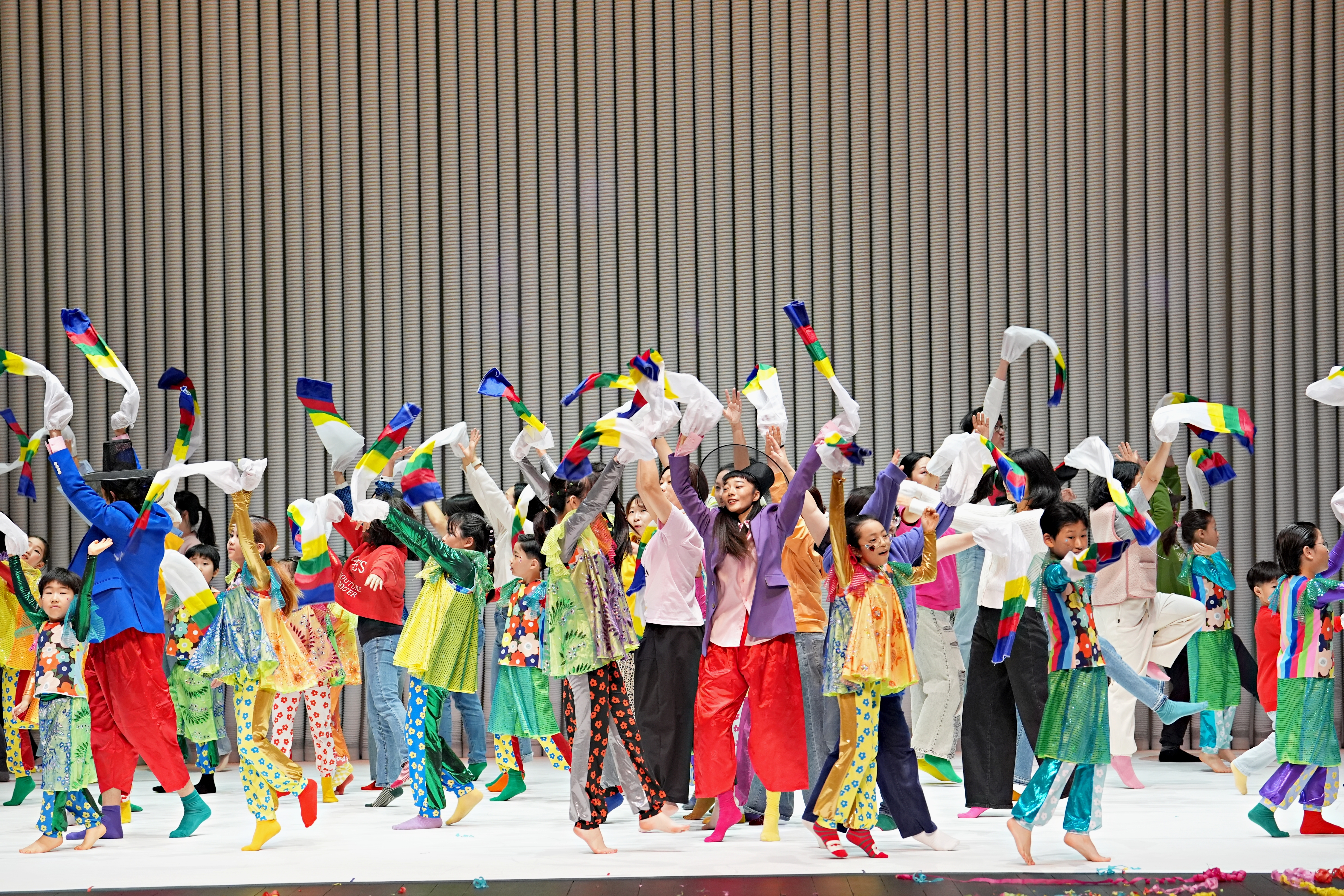
After years of building successful El Sistema-inspired youth orchestras, how do we explain why this work matters as it expands into other art forms? In 2025, my team and I were involved in developing a “Dream Arts Ensemble Value Framework,” an effort to answer that very question. Dream Arts Ensemble is a national arts education initiative in Korea that grew out of Dream Orchestra, a national El Sistema-inspired youth orchestra program launched 16 years ago. Since then, it has expanded into dance, theater, and visual arts, and now operates across approximately 113 local sites. As the initiative has grown in both scale and diversity, it’s become necessary to articulate what holds this work together.
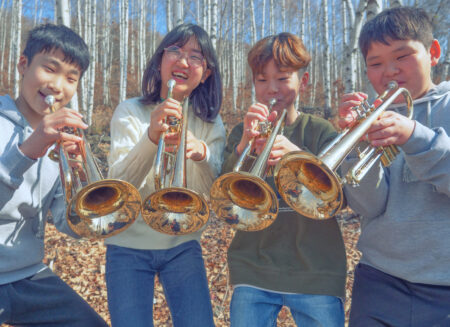
My relationship with this work goes back to its beginning. In 2010, after the Ministry of Culture, Sports and Tourism and the Korea Arts and Culture Education Service (KACES) launched the El Sistema-inspired program, I was commissioned to evaluate and design the program with a mid-to-long-term plan. Since then, I have remained involved as a researcher and consultant, observing at close range how practices in the field have continued to evolve.
When we first designed the Dream Orchestra in 2010, we saw “isolation” as one of the most urgent conditions in children’s lives. At the time, the intensity of college entrance competition had already reached elementary school, and many children were being pushed into highly competitive, lonely environments.
Sixteen years later, children’s lives have not become easier. They remain caught in the competitive trap of the education system while social and economic inequality continues to deepen their vulnerability. Declining physical and mental wellbeing, weakened community ties, and the replacement of direct relationships with media-based activities have also left them increasingly disconnected.
This is not an individual problem. It is shaped by the conditions in which they are growing up, making experiences of self-expression, self-understanding, friendship, cooperation, and ecological connectedness even more important. This led us to consider their capacity to dream. As Korean sociologist Hong Jung Kim has argued through the concept of “dream-capital,” the ability to imagine a future, and to move toward it, is itself unequally distributed among young people. With this perspective, we recognized the need to more clearly articulate the nurturing of “dream-capital” as a central vision of the Dream Arts Ensemble.
Drawing on the Dream Arts Ensemble’s accumulated experience and people—young alumni of Dream Orchestras, artists and administrators working in local hubs, and children and youth participating across the country—we identified a shared value system that captures the Ensemble’s inherent qualities and guides our collective focus. Through a survey of 880 participants, focus group interviews, and years of program reports, we gathered the values and practices emerging from the field and articulated a clearer vision: to nurture children whose capacity to dream is deeply valued, and to build a generation of abundant, shared dreamers through collective art-making.
What are we really trying to achieve when young people create art at a Dream Arts hub? The newly created Value Framework intends to help the Dream Arts’ complex ecosystem respond to this question in practice. Across the country, each local hub works in its own context and develops its own approaches to arts education; the framework simply offers a shared language that helps them explain and understand their diverse practices in relation to a common purpose.

At the heart of the framework are five core values, embodied through the shared practice of making art together: experiencing the joy of artistic immersion, finding one’s own voice, taking risks without fear of failure, co-creating a welcoming space, and discovering harmony in difference. The activities through which these values manifest—exploring, practicing, expressing, creating, performing, and reflecting—are not a fixed sequence but interwoven actions that overlap and take new shape within each artistic journey. In this way, values become lived experiences, not steps on a path.
In practice, the framework helps localized decision-making: which artists to invite, how to design and sustain the program, and how to evaluate and document what matters. It helps teaching artists become translators and stewards of the program’s core value in their own communities, and reflect on whether children are benefitting.
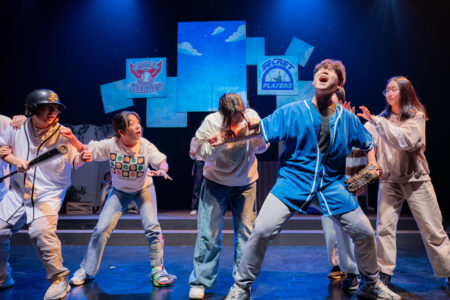
At the national level, the framework helps KACES connect learning across sites, keep the program’s purpose visible, and show how local practices add up to broader public value. Local hubs are supported without being reduced to a uniform practice, while policymakers and funders come to see the Dream Arts as public infrastructure that helps children find their voices, build relationships, and see new possibilities for their lives.
Most importantly, the framework positions children and young people not as passive beneficiaries but as active members of an artistic community.
As it grows, Dream Arts is becoming a public arts education approach that asks artists, local communities, and national systems to stay accountable to children’s lives. In a world that too often narrows their imagination and sense of possibility, I am always inspired when I meet artists and administrators across Dream Arts hubs who already carry this responsibility in their daily work.
I am hoping that the value framework developed through this process will be used not as a static document but as a living guide—one that interacts with the relationships children build as they face the many demanding realities of life. The framework is an invitation, prompting us to ask how we can keep the intrinsic qualities of artmaking alive in the lived realities of children and communities.
Contenido relacionado
Todas las regiones, Colaboraciones, Creación de comunidades, Reunirnos, Noticias y recursos
U.S. Music Education Programs Invited to Join Music Inclusion Hub
Michael Gutierrez
Collaborations, Community Building, Featured, Gather Together, North America, Perspectives & Collective Action, Student Voice & Leadership
Creating a Community of Belonging at OrKidstra
Michael Gutierrez
Africa, Collaborations, Community Building, Featured, Gather Together, Perspectives & Collective Action, Student Voice & Leadership
Re-birth: 18 Years of Music, Meaning, and Maturing
Michael Gutierrez
Collaborations, Community Building, Featured, Gather Together, North America, Perspectives & Collective Action, Peru, Professional Development, Strings, Teaching & Learning
Violin Included: Reflections on Leadership, Giving, and Growing Up in This Field
Patrick Scafidi


