

Noticias y recursos
Dispatches from an Inspiring Trip to Superar Budapest
Danielle Williams, Director of Education, Baltimore Symphony Orchestra OrchKids, Maryland, USA
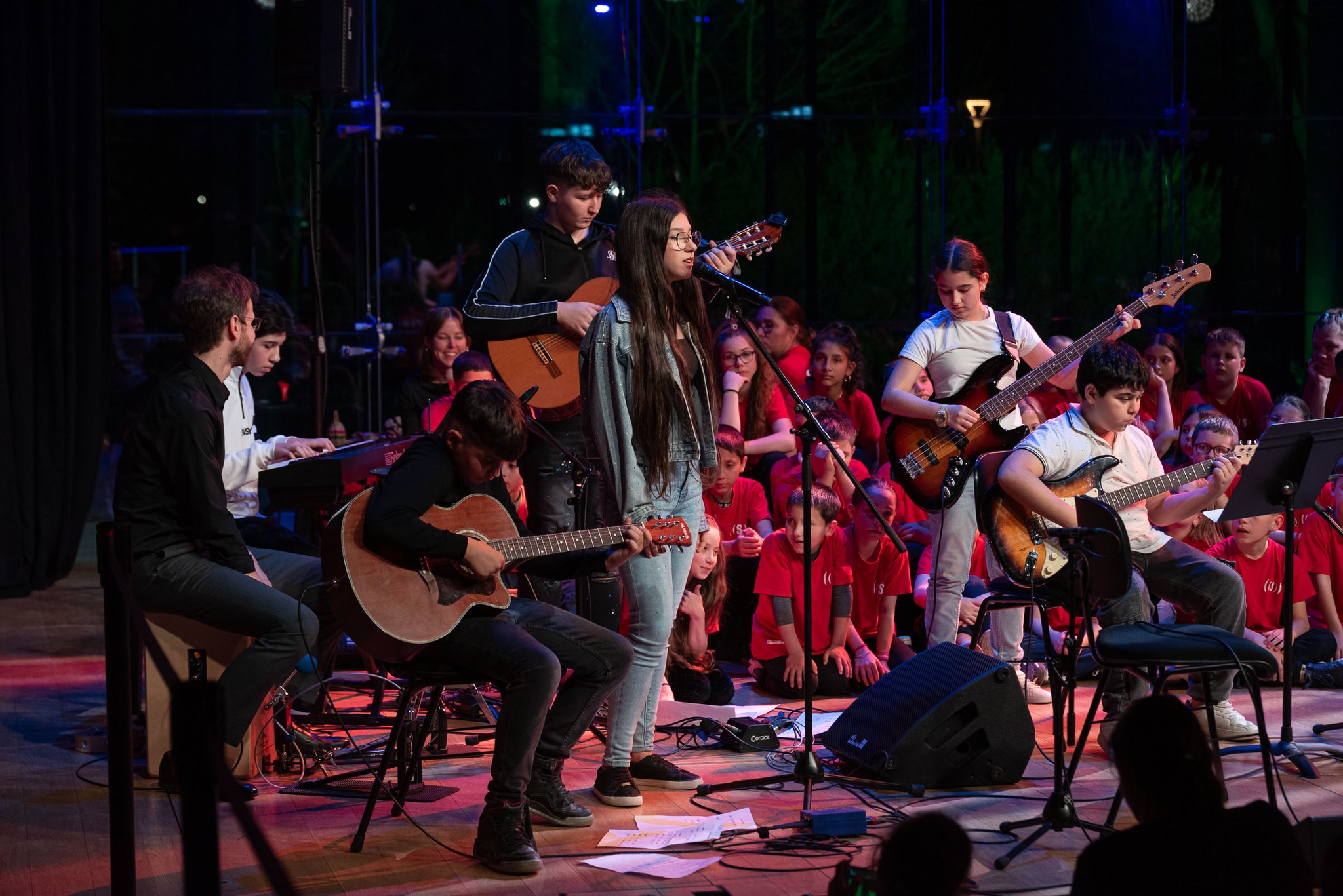
Student-led performance at Superar Hungary. Photo: Superar Hungary.
If I could offer a travel tip to anyone lucky enough to visit another city or country, it would be this: reach out to a local El Sistema-inspired program, or a similar music for social change program, and visit it! Over the past two decades, I’ve had the privilege of visiting such programs across five continents, learning from colleagues who share a common mission while working in vastly different contexts.
During my spring break this year, a trip to the beautiful country of Hungary led me to connect with the wonderful team at Superar Budapest. What began as a simple visit quickly turned into something much more. I not only observed their student-led ensemble, but also had the chance to jump in, participate with the students, and hear directly from the students and team.
Had I experienced Budapest only through the usual tourist lens, I would have missed the opportunity to connect more deeply with the people and stories behind the city. Instead, visiting Superar Hungary led me to meet Gergely Bándi—Program Coordinator, Project Manager, and Teaching artist at Superar Hungary—who welcomed me into a rehearsal with their student-led jazz ensemble.
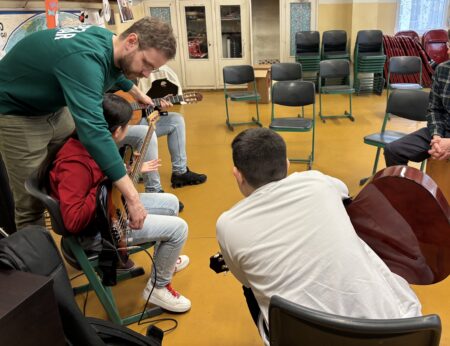
From the moment I stepped into the classroom, all around me were the familiar cultural artifacts that unite us across the global field of music for social change programs: handwritten chord charts on large sheets of paper, solfège visuals taped to the walls, and photos of past performances filled with the joyful faces of students. In a completely unfamiliar country, it felt instantly like home.
When the students arrived, language barriers quickly dissolved through smiles, laughter, and, of course, music. Gergely led a check-in and an icebreaker game, just as we do every day at my U.S. program, OrchKids. Then we dove into rehearsal, and to my surprise, the first tune on the music stand was the American jazz standard “Fly Me to the Moon.” Singing and playing alongside the students was an absolute blast. They led confidently with count-offs, took bold and expressive solos, and were gently guided by Gergely when needed. The leading energy in this group was clearly student ownership: students choose their own repertoire (think jazz-pop with strong Roma influences), make decisions together, and explore their identities through music. Many of these young artists come from Roma communities or other minority and immigrant backgrounds, bringing deep cultural roots and fresh perspectives into the room.
One of the most inspiring moments came when Gergely and the students showed me a video of a Superar performance. Superar operates across eight countries in Europe, and each year they unite for a massive festival concert. I was amazed—not only by the scale of bringing so many students and teachers together, but by the fact that they coordinate all of this while moving between at least four different languages! It was both humbling and inspiring to witness the level of collaboration, flexibility, and shared purpose embedded in their organizational culture.
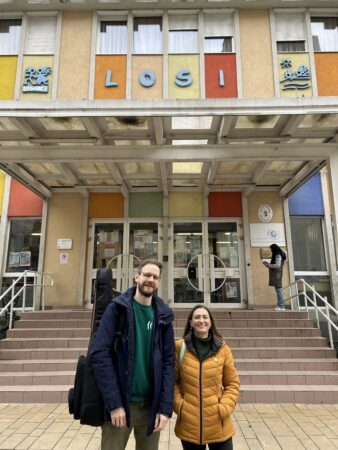
Superar Hungary, which began in 2018, has more than 430 young musicians spread across eight partner schools offering free, high-quality training in choir, guitar, and ensemble. In a country known for its traditional education system, Superar Hungary is shaking things up by training teachers, rethinking classrooms, and proving that music can be a powerful engine for social change. They incorporate a wide range of musical styles, from classical choral works to Middle Eastern melodies, pop hits, or traditional Roma songs, all woven together into a global soundtrack that reflects the richly diverse backgrounds of the students.
As I said farewell to my new young Hungarian friends, I experienced a full-circle moment: Gergely shared that he was inspired to create this student-led jazz ensemble after his U.S. residency at the Zumix program in Boston, Massachusetts (another program I’d had a chance to visit). From the U.S. to Hungary and back again, ideas continue to travel, evolve, and connect us. It was a powerful reminder of how deeply interconnected this global community truly is.
Experiences like this reinforce the importance of making time for exchange and connection. Amid busy schedules and endless to-do lists, stepping into another program, even for just a few hours, can spark new ideas, deepen our understanding, and reignite our passion as educators and leaders. These moments invite us to reflect, to grow, and to see our shared challenges and joys through a broader, more vibrant lens.
Contenido relacionado
Construcción de la Comunidad, Destacado, América Latina, Opinión, Perspectivas y Acción Colectiva

Despacho desde la diáspora venezolana
Rodrigo Guerrero

Asia, Asia/Oceanía, Opinión, Perspectivas y acción colectiva, Enseñanza y aprendizaje
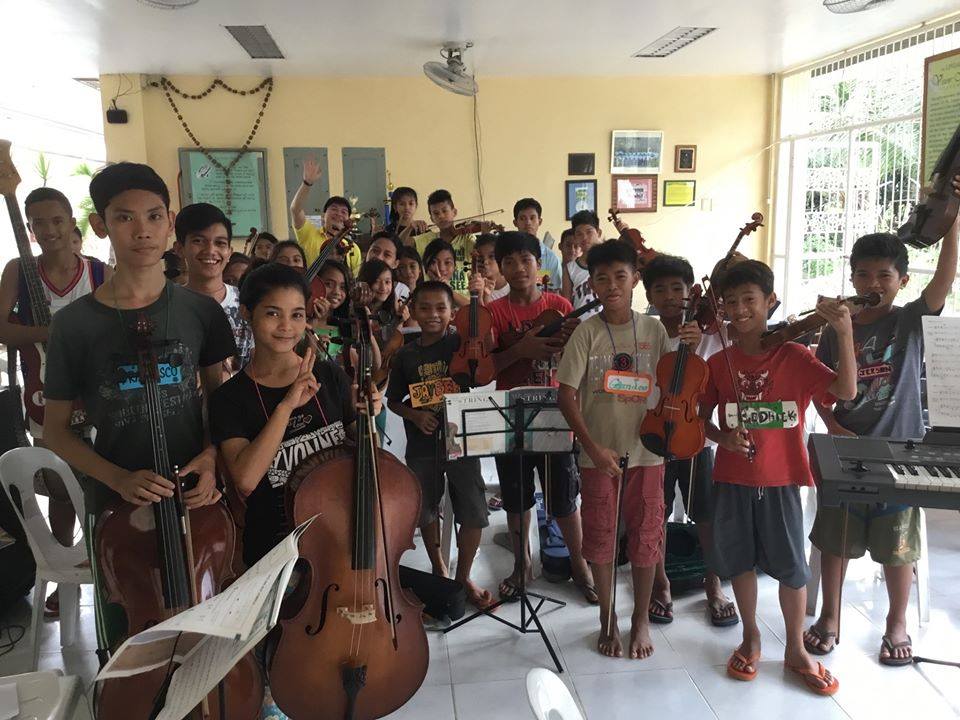
De Lapu-Lapu a Toledo: la influencia de El Sistema en Cebú, Filipinas
Axelle Miel
Embajadores, Colaboraciones, Europa, Voz y liderazgo de los estudiantes, Enseñanza y aprendizaje
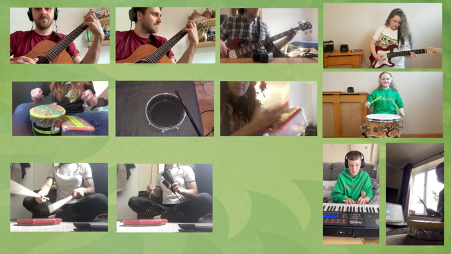
De Brasil a la Ruta de la Seda, de los tambores hechos a mano a Pro Tools: Cómo dos organizaciones musicales juveniles del Reino Unido mantienen su compromiso y exploran nuevos territorios
Matthew Jones
África, Embajadores, Construcción de la Comunidad, Voz y Liderazgo Estudiantil
Actualización de Ghetto Classics
Stephen Ongoma


