

A Living Network Meets in Milan
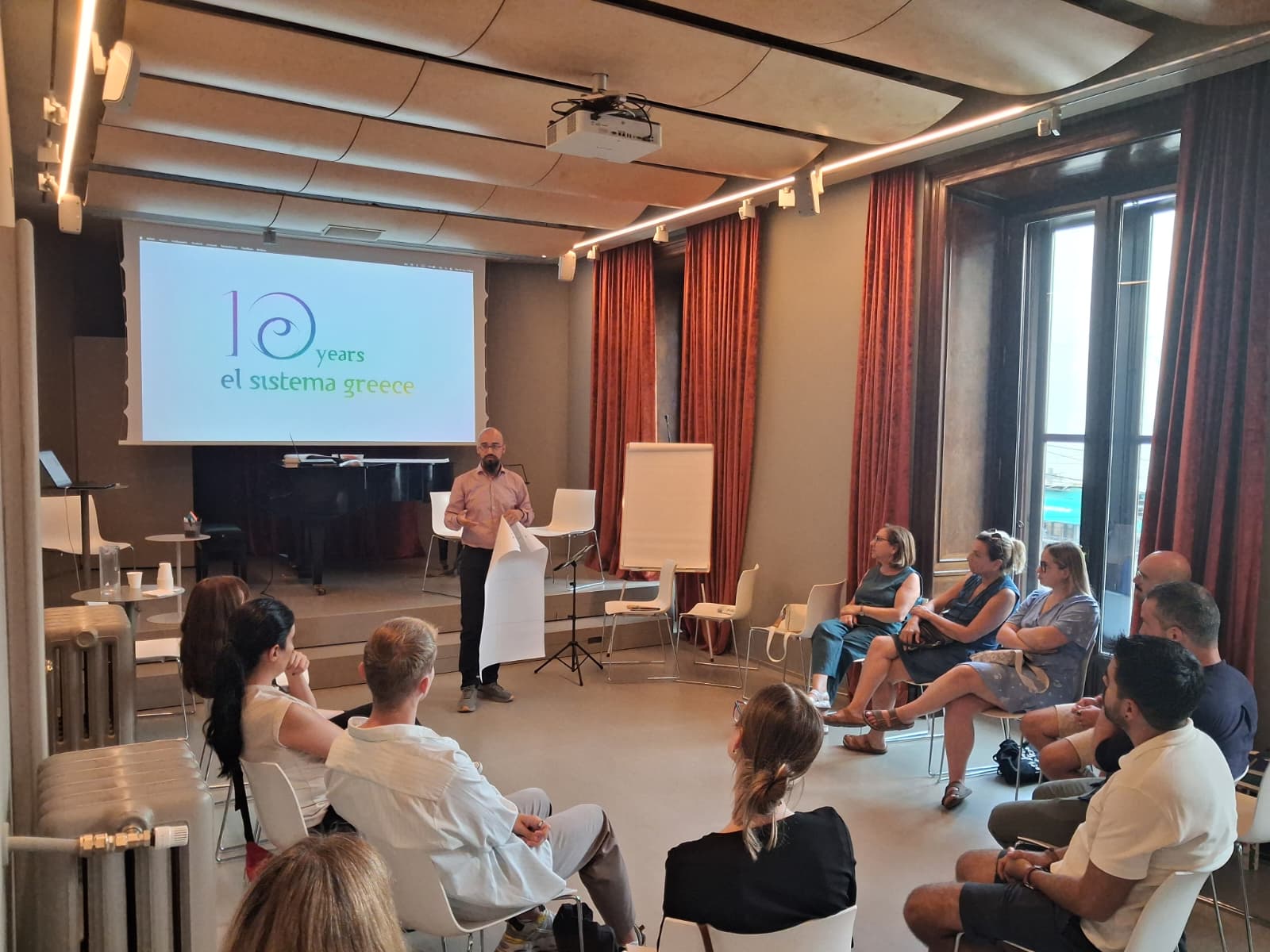
Photo: Sistema Europe.
“It gave me great peace of mind to know that there are such capable and inspiring people whom I can turn to when I face problems that I cannot solve on my own.”
This was how one of my peers at a Sistema Europe gathering, in Milan, Italy this past August, reflected on our three days together. Her words got to the heart of a question I had been thinking about for some time:
What keeps a network alive?
Over the years, Sistema Europe has answered this question by bringing its members together, finding ways to meet despite limited resources. The projects and constellations may differ, but ours remains a living network.
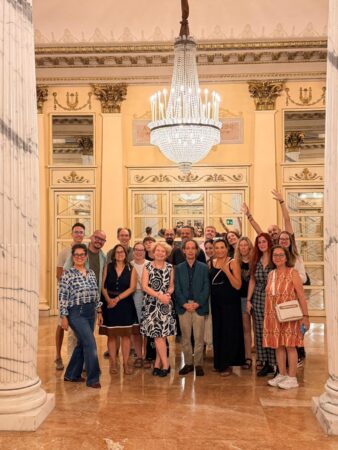
That vitality was on display in Milan, when 30 people from 14 Sistema Europe organizations came together through our project Music and Social Action in Europe: Practices in Exchange for three days of exchange and community building. Hosted by the Italian program SONG Sistema Lombardia and the Fondazione Pasquinelli, our gathering moved between artistic and pedagogical practice, asking questions around sustainability, inclusion, advocacy, evidence, communication, understanding trauma, and the future of the network.
Ten years ago, many conversations in music for social action centered on establishing a
nd defending the idea itself. We were trying to articulate what made this work distinctive, what we were actually trying to change, and how artistic ambition, education, social responsibility, and access could coexist within the same practice.
These conversations drove us forward and connected us. At the Milan gathering, it was clear that those conversations have changed. Many of us have now lived this work for years; we have grown, made mistakes, changed direction, watched children become young adults, and learned that many big questions become more complicated with time, not less. Today, we are asking: How do we match our intentions with the experiences of our young people? What evidence matters, and to whom? How do we communicate complexity without turning young people’s lives into stories of impact? And how do we grow without losing the relationships and values that made the work meaningful in the first place?
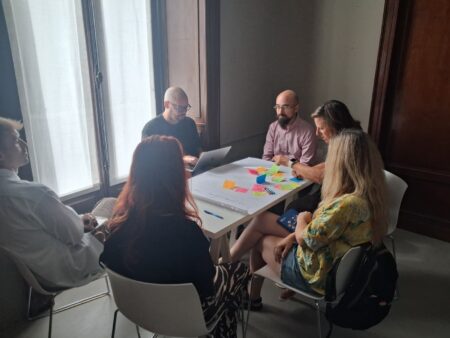
For us participants, these conversations are more than a way of checking in on ourselves. They breathe life into our network. In an early session, Sistema Europe Founder and President Marshall Marcus asked us to work together around a deceptively simple question: What do we want from Sistema Europe, and what do we need from it? Familiar words appeared: “funding,” “advocacy,” “exchanges,” “training,” “shared knowledge.” But the word “relationships” kept returning. That idea followed participants home: in their reports, attendees wrote about knowing more clearly who they could turn to for particular expertise, wanting to involve their teachers and young people in future exchanges, and seeing their own daily work less as an isolated activity and more as part of something larger.
The question took a different shape with Angeliki Georgokosta (El Sistema Greece) and Maria Majno (SONG). As 14 programs mapped what they were already doing, what emerged was how much individual knowledge had yet to be shared collectively. Myria Kkali (Sistema Cyprus) then turned our attention to what we do with that knowledge. Looking together at a real concert post, we could see how easily we document what happened—the concert, the venue, the performance—while saying much less about why it mattered.
And then came the harder question. Whose story is it, and who should tell it? This connection between evidence and experience also stayed with participants: how can we combine data with real experiences to make a more credible case for why the work matters, while giving young people a stronger voice rather than only speaking about or for them?
Maria Guerrero (Acción por la Música) brought another tension into the room: What becomes possible when we act together that would not be possible alone? The discussion moved between the desire for a stronger collective voice and the importance of keeping that voice connected to the experience of the members and young people it represents. The question of representation continued beyond the session, with the suggestion that older students themselves could be part of these encounters, bringing their experience into conversations and policies intended to respond to their needs.
Lara Camia (Trillargento) approached sustainability differently, asking: “What sustains us but does not appear in the budget?” Her stories showed how relationships with families, volunteers, and communities can gradually become trust, knowledge, and organizational capacity, often in ways no one has planned. But she also complicated the idea: relationships can create dependency or exclusion, and participation can become invisible unpaid labour.
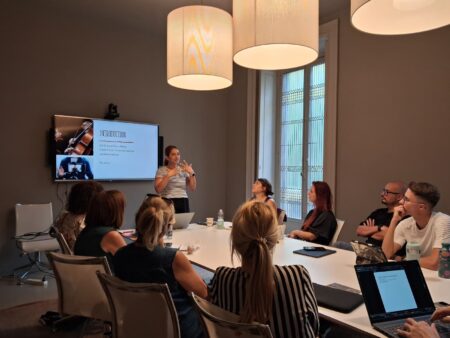
Perhaps this was what mattered most about the three days. We were there not only to present what has worked. There was also space to question our own assumptions, and to look at our practice through different organizational and cultural perspectives.
A living network is built over time, through relationships strong enough to hold successes, difficulties, disagreement, and change. Our Milan gathering reminded me how powerful it can be to interrogate that complexity alongside others. We are still asking big questions, but their answers are now harder to see, leading us and our young people down uncharted paths.
Perhaps that is when a network is truly alive: when it is learning. We pave these paths with new conversations, sparking powerful connections with every step.
Co-funded by the European Union. Views and opinions expressed are however those of the author(s) only and do not necessarily reflect those of the European Union or OeAD-GmbH. Neither the European Union nor the granting authority can be held responsible for them.
Contenido relacionado
Collaborations, Community Building, Featured, Gather Together, Italy, Perspectives & Collective Action, Program Design, Student Voice & Leadership, Teaching & Learning, the ensemble
GUEST PERSPECTIVE
When Art and Music Create a Shared Listening Space
Patrick Scafidi
All Regions, Collaborations, Community Building, Events/Performances, Gather Together, News and Resources, Professional Development
NEC Creates Free Music-Learning Game
Patrick Scafidi
All Regions, Collaborations, Community Building, Events/Performances, Gather Together, News and Resources, Professional Development, Scotland
Compelling New Research in Scotland
Patrick Scafidi
Africa, All Regions, Collaborations, Community Building, Events/Performances, Gather Together, News and Resources, Research
Mapping Social Impact Across Africa
Patrick Scafidi


