
Noticias y recursos
In South Africa, a Marimba Band Moves with the Music
Thandeka Dlamini, Band Manager, Organizer, and Coach, Goede Hoop Marimba Band
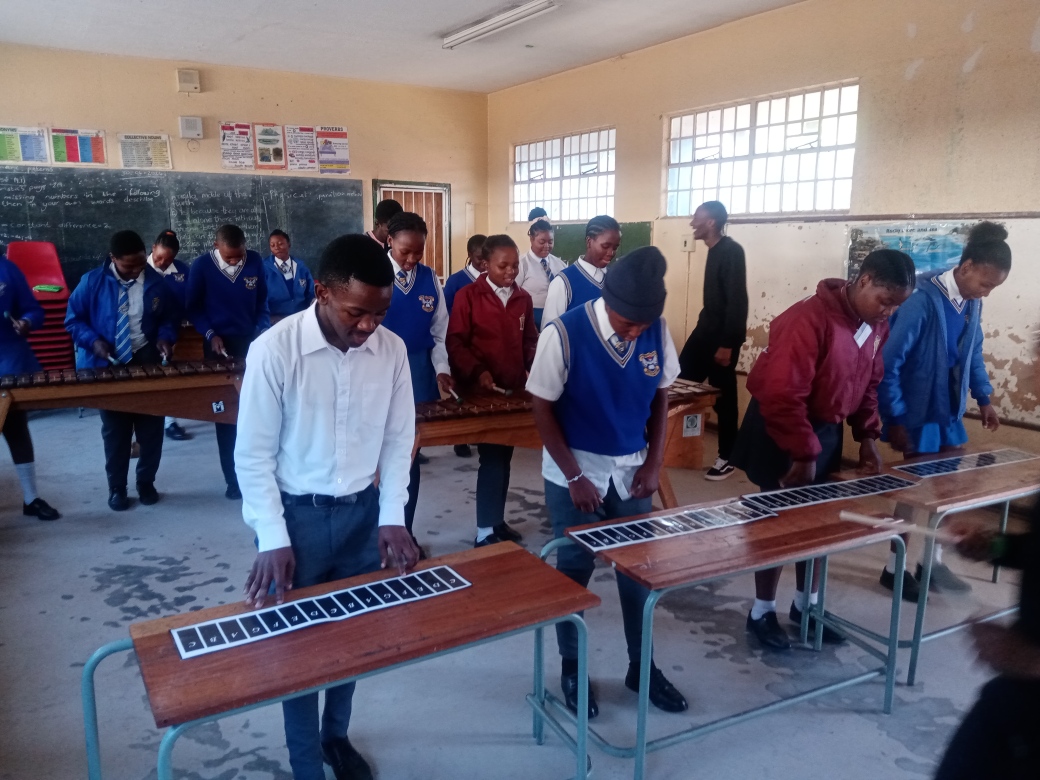
Practicing in the classroom. Photo: Goede Hoop Marimba Band.
Since 2014, the Goede Hoop Marimba Band has operated in Boksburg, Gauteng, a small South African town in the smallest South African province. The band started in 2014 at the Goede Hoop Primary School, the hub where all practice takes place, as a way of keeping children out of the streets after school, committing them to something that could positively impact their future, and strengthening their community bonds.
Though we are one band, our students are divided into learning groups based on their proficiency: Junior Band (ages 9–11), Senior Band (ages 12–14), Prestige Band, and Alumni Band. The Prestige Band is comprised of learners from two neighboring high schools who started playing while they were still in primary school, while the Alumni Band is a group of our longest-tenured members, who began in primary school and are now attending university or working.
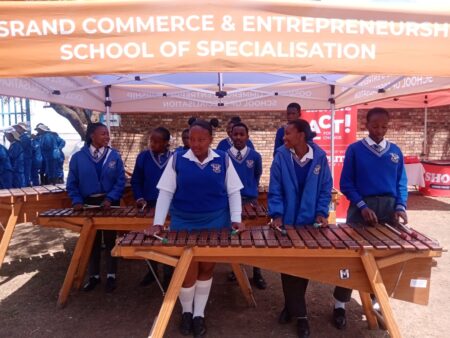
Our band has grown, from 10 members in 2014 to about 45 members now. Learners come for practice on Tuesdays and Thursdays after school, from 2–4 p.m, where we begin with games to break the ice and take kids’ minds away from what happened in class during the day. Then, we get into marimba practice.
Marimba has been the key to our band’s cohesion, offering a wide range of educational, social, physical, and emotional benefits. Members must learn to give others space, to wait their turn, and to be part of a team. Playing marimba is such a holistic experience; it connects the mind and the body while building social and musical skills. It also boosts learners’ self-esteem and communication skills: not only must students listen to one another while playing, but also, they get to feel heard. It often overwhelms me to see them playing together, giving each other that beautiful eye contact and smiling as they play.
They are moving their bodies, too. Part of this is a natural result of playing the marimba, which improves (and feels better) when we allow our bodies to move naturally within the music. But exercises help with this as well. To liven up our practices, I have students use the “snake movement”—an exercise wherein learners move from one marimba to another at a count of one, two, three, or four, with the “head” of the snake never touching the “tail.” Wherever they land—sometimes I’ll ask them to move more than one marimba over—they must play that marimba’s part in the arrangement, using the mallets waiting there for them. Students get to learn each part of the marimba, while I get to see which sections they are most struggling with, and then adjust lessons accordingly. Most critically, students loosen up; they learn to flow with the music and play without fear.
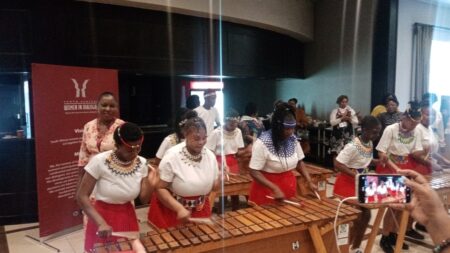
I always encourage students not to panic during performance. Once you hit the wrong note, stop a bit, dance a bit, wait for the band to start again on the first pattern, and then rejoin them. The stop-and-dance tactic has proven so useful that some students will dance while playing just to entertain the audience. It is thrilling to see them perform freely in this way without sacrificing their listening skills—in fact, this freedom feels directly correlated with their effective collaboration.
Of course, it has been quite a challenge to operate without any sponsors to assist with the band’s basic needs. But, because of the passion, resilience, determination, and love of music that all the band members have, we have found ourselves on our feet again. Much of this comes through our performances. We do get invited to distinguished events across the country—events like galas, dinners, festivals, and concerts. These are paid performances, and they help: in 2024, we were even able to buy uniforms for band members. But our community presence matters as well. Youth Day events allow the band to function as a public good, helping to celebrate cultural milestones or raise awareness for causes like medical funding or violence prevention. Beyond supporting those missions, these events help band members form relationships with members of the community where they live.
We aim to continue growing and empower even more young people through music. We are highly motivated to make real change happen in our society and across the world. We would also like to become more diverse, reaching those beyond South Africa with our music. We wish to go out and explore. As our slogan says, “Through music we speak, through music we heal”; it is our main priority to heal the broken-hearted, to give hope to the hopeless, and to inspire people, especially the youth. We hope that our music reaches all places in the world.
Contenido relacionado
Todas las regiones, Destacado, América del Norte, Repertorio, Enseñanza y aprendizaje, el conjunto
Inclusión a través de Tiered-Parts Music
Zachary Bush

Creación de comunidades, Destacado, América del Norte, Diseño de programas, Voz y liderazgo de los estudiantes, Enseñanza y aprendizaje, el conjunto
Armonización en varias lenguas
Ken MacLeod
Editoriales, Investigación, Enseñanza y Aprendizaje, el conjunto
Editorial: Febrero 2020
Bonnie Reagan
Asia, Asia/Oceanía, Diseño de programas, el conjunto del mundo
Conozca la "Orquesta Reina del Paraíso": Un nuevo programa en Papúa Nueva Guinea
Patrick Scafidi