the ensemble



Two New Articles from Dennie Palmer Wolf
Two articles by Dennie Palmer Wolf of WolfBrown, one of the nation’s most respected arts learning researchers, plant significant markers in the field. “Teaching Artists as Essential Workers: Respect, Collaboration, and Heft” is a rare researcher’s recognition of the importance and vulnerability of the teaching artist workforce. She sees teaching artists as first responders and champions of social equity, pointing out what they need to thrive and—in this crisis time—to survive.
Embracing the Unexpected
Daniel Trahey, Founder/Director, Collective Conservatory & OrchKids, Baltimore, MD
It’s built into our DNA to think, plan, and act towards the future. Your brain is wired to do amazing things, right at this moment.
Editorial: May 2020
Jose Luis Hernandez, Founder/Director, Sistema Tulsa, OK
We are living in a moment of unprecedented anxiety. Those of us who know and teach the musical arts as means of expression have been busy trying to summon music’s healing powers. We know instinctively that music is the place we must go to and invite people into, to be soothed and comforted. It is one of our spiritual practices. Leonard Bernstein wrote about this at another time when our nation mourned, after the 1963 assassination of President Kennedy: “We must make music more devotedly, more intensely, than ever before,” he said. This time is different. The context in which we are to make music has changed. We have been challenged to deal with the fact that our healing business must be conducted on the Internet.
24th Annual Sphinx Competition Opens
The Sphinx Competition is a national competition offering young Black and Latinx classical string players a chance to compete under the guidance of an internationally renowned panel of judges, and to perform with and receive mentorship from established professional musicians. The repertoire requirements for the 24th Annual Sphinx Competition have been announced and applications have opened online.
The Lewis Prize Announces COVID-19 Community Response Fund
The Lewis Prize recently announced their COVID-19 Community Response Fund, which will award $1 million in grants to support youth-serving music programs in their responsive and adaptive efforts during COVID-19. Here is a toolkit that includes more information about the fund. The application process for their annual Accelerator Award will begin as soon as the Community Response grants are awarded.
Atlanta Music Project: Music of the African Diaspora
Aisha Moody, Cofounder and Chief Program Officer, Atlanta Music Project, GA
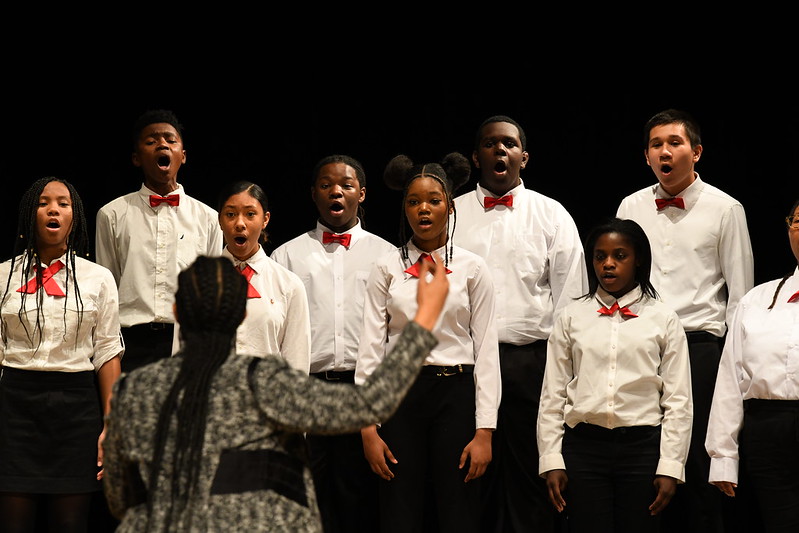
In February of this year, the Atlanta Music Project presented a monthlong concert series celebrating music of the African Diaspora. The Music of the African Diaspora Concert Series garnered much attention and welcomed larger audiences than most AMP events. Its success led us to make the series an annual event, not only due to our supporters’ positive response but also because of its impact on our young musicians during and leading up to the concerts.
Just-Launched Collective Conservatory is Bold Pandemic Response
The just-launched Collective Conservatory is a bold response to the pandemic crisis. Describing it as “Immersive Online Music Education,” founder Daniel Trahey and a faculty of established teaching artists, wellness advisors, and volunteer cultural ambassadors deliver holistic, customized, music-centered programs to partner organizations over the Internet. Read this issue’s Guest Perspectives column on this page to learn more from Daniel Trahey.
Professional Development Clock Hours from NAfME
Free professional development clock hours have been made available by the National Association for Music Education in response to the unprecedented cancelations of conferences and shift to online teaching. These resources, including ten webinars from NAfME Academy, 14 articles from Music Educator Journal, and Live Professional Learning Community webinar series, are peer-reviewed and specifically developed for and by music educators.
Case Study on Cultural Humility from Institute for Music Leadership
Buffalo String Works in Buffalo, NY has worked with refugee students from Afghanistan, Burma, Eritrea, Iraq, Sudan, Somalia, and Syria. Though inspired by the international El Sistema model, the organization faced plenty of cultural hurdles in working to serve the diverse population. Eastman School of Music’s Institute for Music Leadership has written a case study examining the early years of BSW as it worked to adapt to the needs of the community. Read more to learn how they strived for “cultural humility” and musical excellence simultaneously—these lessons in inclusion can be applied to all programs, no matter their makeup.
Welcome Videos Provide Sense of Familiarity for Students at WHIN Music Community Charter School
A sense of safety and connectedness is the foundation of successful student learning, but natural disasters can cause turmoil. The impacts of the current pandemic have upended all our familiar routines and rituals, so we must re-dedicate ourselves to these practices. New York City’s WHIN Music Community Charter School cleverly addresses the issues of familiarity and routine for their disrupted students in a video that welcomes them to their online classes.


