

In Uganda, Music Unearths the Questions That Heal Us
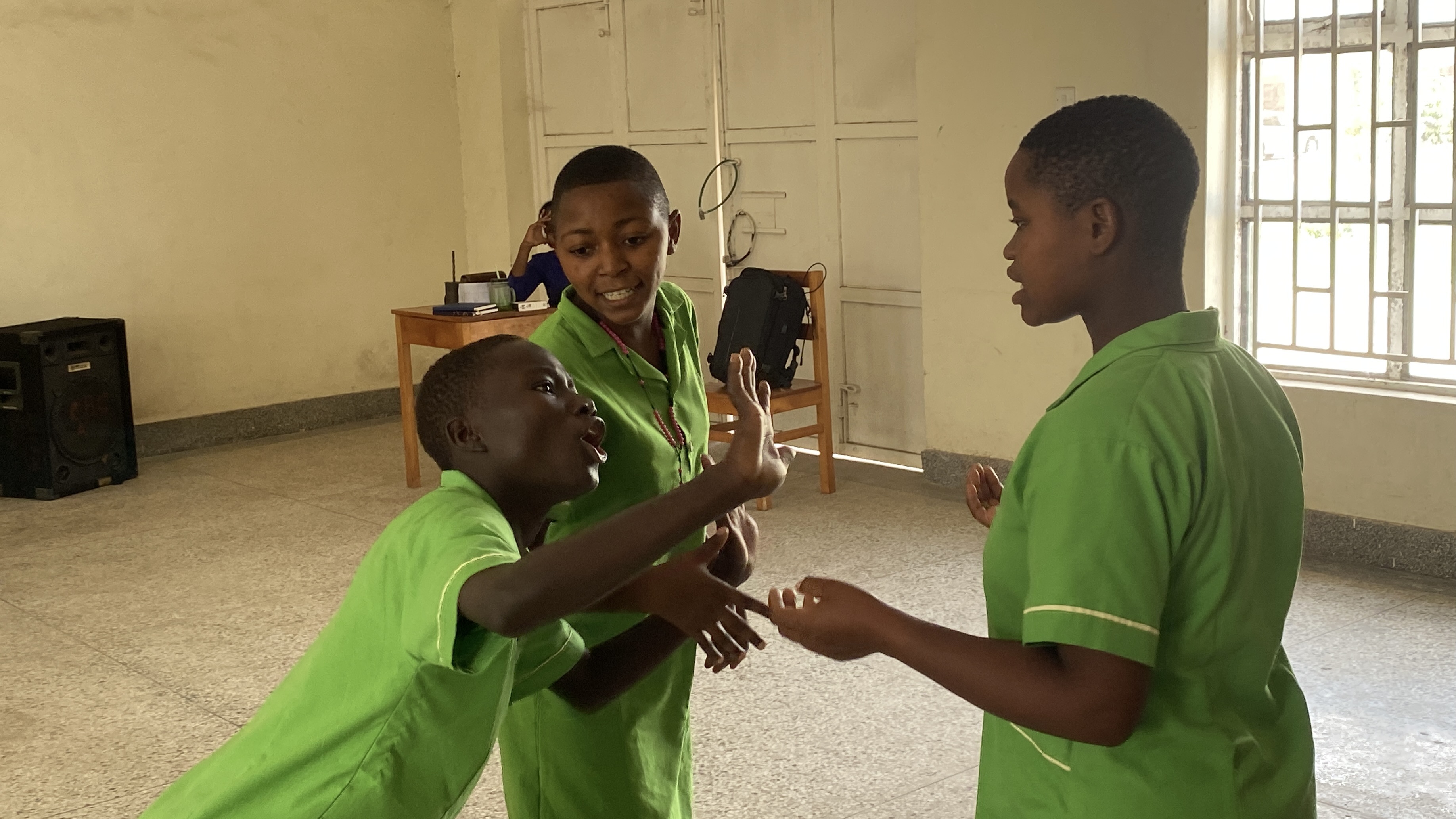
Participants performing drama to communicate issues during sessions. Photo: Usanii Village Africa.
When we started Health Education through Arts and Leadership (HEAL) we thought we were bringing a program to young people in Kasese, Uganda. After our first workshop, I realized that the more important thing was what young people were bringing to us.
HEAL grew out of Usanii Village Africa‘s previous work with young people, including more than 50 girls and boys whose experiences helped shape the program. Since 2021, Usanii Village Africa has worked to empower young people across Uganda through the arts. In designing HEAL, we wanted to explore how the arts could engage young people in uncomfortable conversations, helping them develop leadership and communication skills while exploring adolescent health and gender equality.
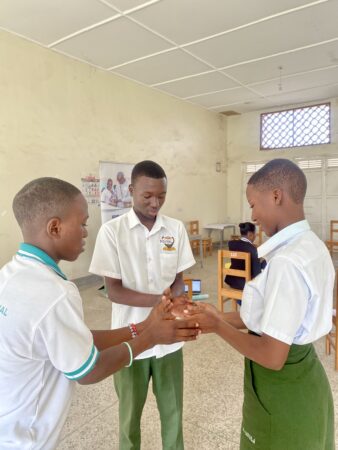
We began by talking to schools and local leaders, who confirmed many of the challenges we expected. Schools described dropout among learners, particularly girls, with early pregnancy and early marriage among the contributing factors. We also discovered that many schools do not systematically document these trends.
Then came recruitment. We had planned for 20 participants, but 149 young people expressed interest. That was our first surprise. Our second came during assessment: nearly 60% of those who expressed interest wanted to develop their musical and performance abilities but felt they lacked the foundation to participate confidently.
This told us something we had not fully appreciated when designing the pilot. There is a strong appetite for music development, but opportunities to build musical foundations are limited. It became particularly clear with instrumentalists. Young people wanted to learn piano, percussion and other instruments, but instruments were simply not available in sufficient numbers.
Our first interaction series were designed around connection and discovery, where we began testing how music and the arts could become part of the learning itself, rather than an accompanying activity. We used rhythm, singing, movement, drama, and poetry to help participants explore otherwise difficult issues. For example, participants could use rhythm and body percussion to build something together, practice listening by repeating and responding to one another, or use short dramatic scenes to explore situations around relationships, gender roles, and consent.
Songs and familiar musical forms provided another way to introduce and revisit ideas, while poetry and spoken word allowed participants to share personal experiences. Songwriting is now becoming a more deliberate part of the program, giving participants the opportunity to turn these discussions into original lyrics and music. We are still learning which musical exercises create the strongest connections between artistic development and the issues young people want to explore.
And after music provided some forward momentum, their questions stopped us in our tracks. For example, participants talked about beliefs they had encountered around menstruation: that girls should not eat meat while menstruating, should not cross streams of water, or should not enter certain places, like altars. One belief was that if a dog smelled a used menstrual pad, it could cause infertility.
We could have simply said, “That’s wrong.” Instead, we asked: “Why do people believe this? Where did we hear it? What happens when people act on it? And what can we replace the fear with?”
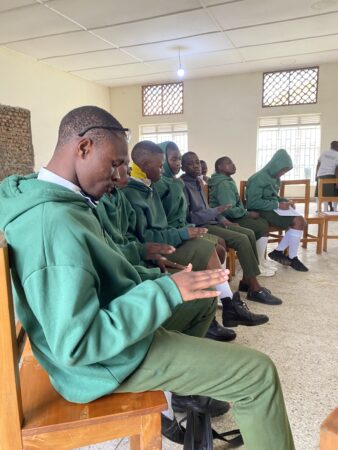
Other conversations became even more sensitive. We heard myths about family planning: that contraception could cause infertility or disability in children, reduce sexual feelings, or create serious reproductive problems. One particularly striking misconception was that a contraceptive device could move through a woman’s body and reach her heart.
These were not statistics from a survey. They were real questions in a room full of young people. Our job was to create a space safe enough for someone to say, “I have heard this. Is it true?”
When we moved into gender equality, the discussion moved from concepts to everyday life. Participants talked about families prioritizing boys’ education, about girls being expected to cook and handle household responsibilities after school, about girls being excluded from inheriting family land. They also described unwanted touching, sexual comments, body shaming, and other harassment that they encounter in their communities and at school.
At the end of the interactive circles, every participant completed a reflection and self-assessment tool. In total, 63% percent said they paid attention to others, 38% asked questions to understand, and 31% said they listened without interruption. Regarding “teamwork,” 88% said they shared ideas while every participant identified a contribution from a teammate. But nobody identified “helping solve problems” as a contribution. I actually found that encouraging—it gives us somewhere to go.
Our next phase will include songwriting, with participants beginning to learn and develop the HEAL Theme Song. They will have to listen to one another: the singer will have to listen to the percussionist, the pianist to the singer, the dancer to the rhythm. The songwriter will have to make room for other people’s ideas. We had originally planned on establishing a ten-day residential program, with breathing spaces between workshops, but schools taught us quickly that this was not realistic. So we changed it. We are now working through phased workshops series, giving participants time to practice, reflect, receive feedback, and return with new ideas.
Perhaps that lesson is where HEAL really begins. Leadership cannot be rushed. Neither can music.
Related Content
All Regions, Collaborations, Community Building, Events/Performances, Gather Together, News and Resources, Professional Development
Successful Students at Sistema Cyprus
Patrick Scafidi
Asia, Collaborations, Community Building, Events/Performances, Featured, Gather Together, Perspectives & Collective Action, Republic of Korea, Student Voice & Leadership
From Program to Public Infrastructure: The Evolution of Dream Arts
Patrick Scafidi
All Regions, Collaborations, Community Building, Events/Performances, Gather Together, Greece, News and Resources, Professional Development
Expanding the Lullaby Project in Greece
Patrick Scafidi
All Regions, Collaborations, Community Building, Events/Performances, Gather Together, News and Resources, Professional Development
Young Composers in Toronto, Canada
Patrick Scafidi


