

Every Lullaby Begins with a New Encounter
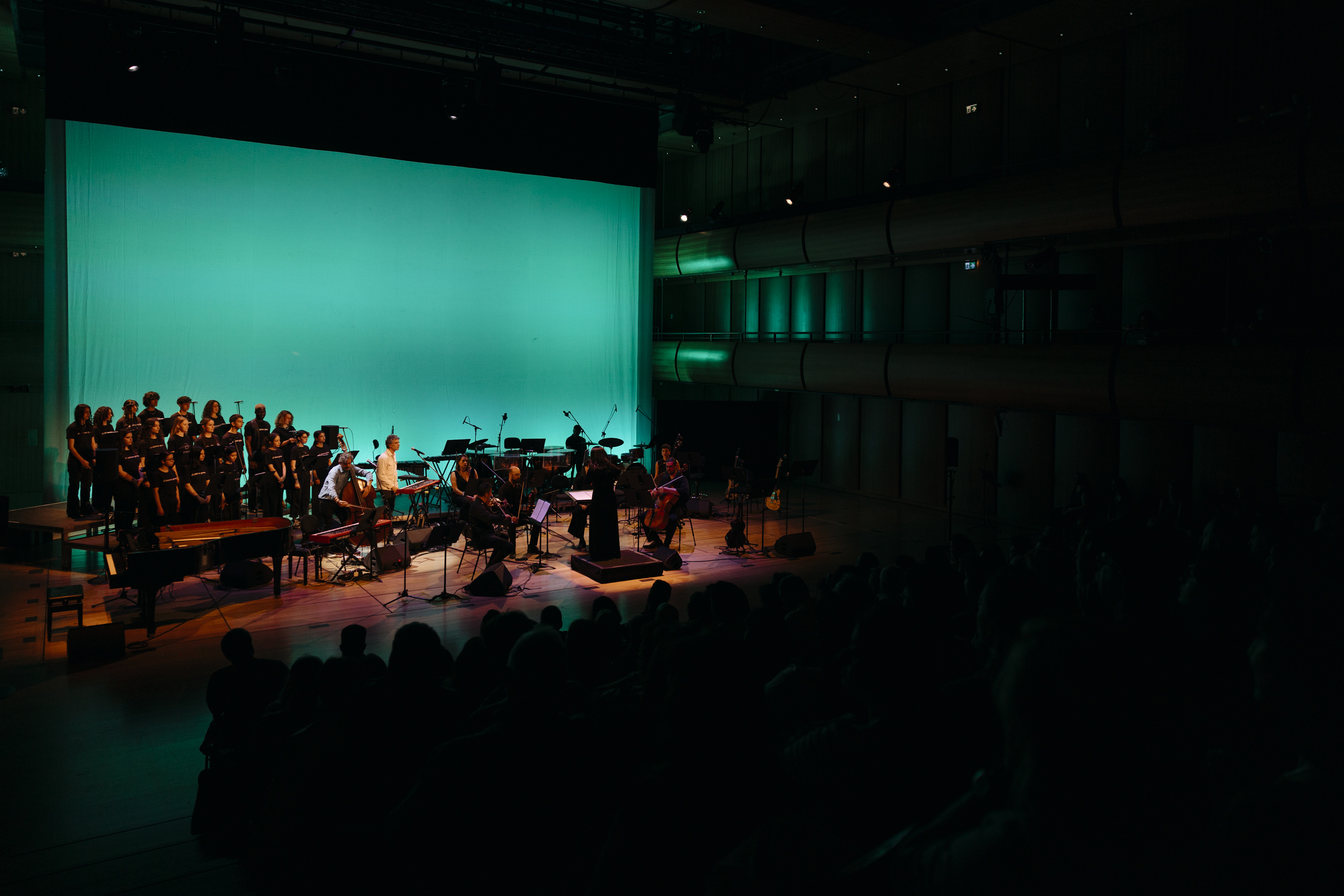
Lullaby Project in concert, Athens, May 2026. Photo: Mariza Kapsabeli.
The first chapter of a Lullaby Project song is usually written in a room where strangers have just met. Professional composers sit beside a mother who has never written music before. A child wanders around the room, curious but unsure. Participants may speak through an interpreter. Others may communicate more through gestures than words. At first, there are introductions, hesitant smiles, and long pauses. There is no score, no lyrics, no expectation of what the music should become.
Then people begin to open up. A memory becomes a story. A story becomes a rhythm. Someone taps a beat on the table; someone answers with a melody on the piano. Strangers stop trying to find the right words and begin listening to each other.
By the time everyone leaves the room, people who met only hours ago have discovered that even the most difficult experiences can become the starting point for a shared act of creation.
These encounters are never the same. Every family arrives carrying different memories and hopes, different ways of expressing themselves. Every composer brings a different artistic language.
The Lullaby Project creates a space where people with diverse lived experiences meet professional composers to transform personal stories into original musical works. It invites them to become co-creators, discovering that their experiences can become the starting point for a piece of music.
Created in 2011 by Carnegie Hall’s Weill Music Institute in New York, the project was originally designed to bring together professional musicians with new and expectant mothers from challenging social environments, inviting the mothers to co-write and sing personal lullabies for their babies. Since then, the program has grown into an international initiative, with lullabies sometimes performed in concerts around the world.
Since 2018, El Sistema Greece has partnered with Carnegie Hall to bring the Lullaby Project to Greece. Guided by its mission of promoting social inclusion through music, El Sistema Greece has expanded the original concept beyond maternity and biological bonds, embracing stories of parental love in all its forms. The Stavros Niarchos Foundation Cultural Center (SNFCC) has been an essential partner in this journey, supporting a program that celebrates care, connection, and the universal language of the lullaby.
For the composers, this process begins without knowing where the conversation will lead, setting aside the instinct to arrive with musical answers and allowing someone else’s story to shape the creative process. The lullaby is discovered together.
One of these encounters brought together two composers, a mother, and her daughter. What began as an afternoon of conversation and improvisation gradually became an original lullaby that no one could have imagined when they first sat together. Following are the composers’ reflections on the process that brought the piece to life.
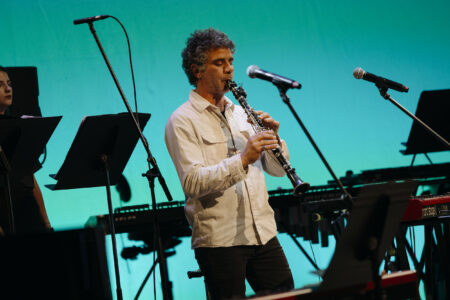
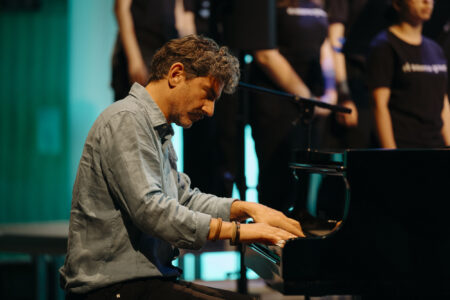
Composer/performer duo “Seeds” (Christos Kalkanis and Michalis Kalkanis) write:
We remember the awkward glances and smiles at our first meeting. The two of us sat in a large office together with Fenia (Project Manager of the ESG Lullaby Project), the interpreter, the mother, and her daughter. Over the course of about an hour, the mother told us the difficult story of her life. Our role was mainly to listen; we asked questions only when needed to better understand what she was entrusting to us. We were struck by her courage. Someone who had lived through so many losses and hardships was choosing to revisit those memories and share them with people she had just met, allowing them to become the starting point for a new piece of music. We could sense within her a strength that was expressed not through big words but through the way she kept remembering, speaking, and moving forward.
The next day, while her story was still fresh in our minds, we began imagining what the piece might become. One question kept returning: how could the mother and daughter become part of the creative process itself? It wasn’t enough to write a piece inspired by their story. We wanted their own voices, both literal and figurative, to become part of the composition.
During our second (and last) meeting, we asked them questions about the role music played in their lives and also about how they imagined our piece: happy or sad? Slow or fast? Sparse in its orchestration, or richer? Instrumental only, or with singing? We came to a shared agreement that we were searching for something full of optimism, hope, and light. The rest of the session was devoted to improvisation.
That second meeting went even better than we had imagined. Beyond our careful planning, something else played a big part: the mother’s natural relationship with music. She sang in front of us without hesitation, with precise rhythm and a clear voice, as though it was the most natural thing in the world. She sang the little song she used to wake her daughters each morning, while tapping its rhythm on the table. That recording became the core of our piece. Then the improvisation began—piano from us, percussion and singing from mother and daughter—which we recorded. We left with a wealth of recorded material and, above all, another lived experience of the greatness of music as a universal language.
In the days that followed, we worked on the material and, adding our own musical elements, did a second round of improvising in Ableton Live (a digital audio workstation), building loops and trying experimental techniques like granular synthesis. Through successive improvisations, we arrived at a draft of the piece. Finally, we imagined a choral melody and wrote lyrics inspired by the mother’s story and her daughter’s bright eyes. The piece, titled “Your Morning Song,” premiered live on May 18th at the SNFCC as part of The Lullaby Project 2026, and is set to be recorded and filmed in October.
If something this beautiful and powerful can emerge from just two meetings, imagine what could become possible through a longer creative process between artists and families—not only musically, but also in the understandings that can grow through shared creation. Perhaps the greatest potential of projects like this lies in the encounters they make possible.
You can watch the video of this song being performed during the Lullaby Project concert at the Stavros Niarchos Foundation Cultural Centre, May 2026, via YouTube.
Co-funded by the European Union. Views and opinions expressed are, however, those of the author(s) only and do not necessarily reflect those of the European Union or the European Education and Culture Executive Agency (EACEA). Neither the European Union nor EACEA can be held responsible for them.
Contenido relacionado
Colaboraciones, Community Building, Editoriales, América del Norte, el conjunto
Editorial: Enero de 2020
Karen Zorn

Creación de comunidad, Destacado, Financiación y apoyo, Reunirse, Diseño de programas, Voz y liderazgo de los estudiantes, el conjunto
Duelo y homenaje a un líder estudiantil
Hermes Camacho
Formación de la comunidad, Eventos/actuaciones, Financiación y apoyo, Noticias y recursos, Enseñanza y aprendizaje, el conjunto
Recursos, diciembre de 2020
Patrick Scafidi
Editoriales, América del Norte, Opinión, Diseño de programas, Enseñanza y aprendizaje, el conjunto
Editorial: Diciembre de 2019
Christine Taylor Conda


