

Building a Culture of Artivism Across Europe
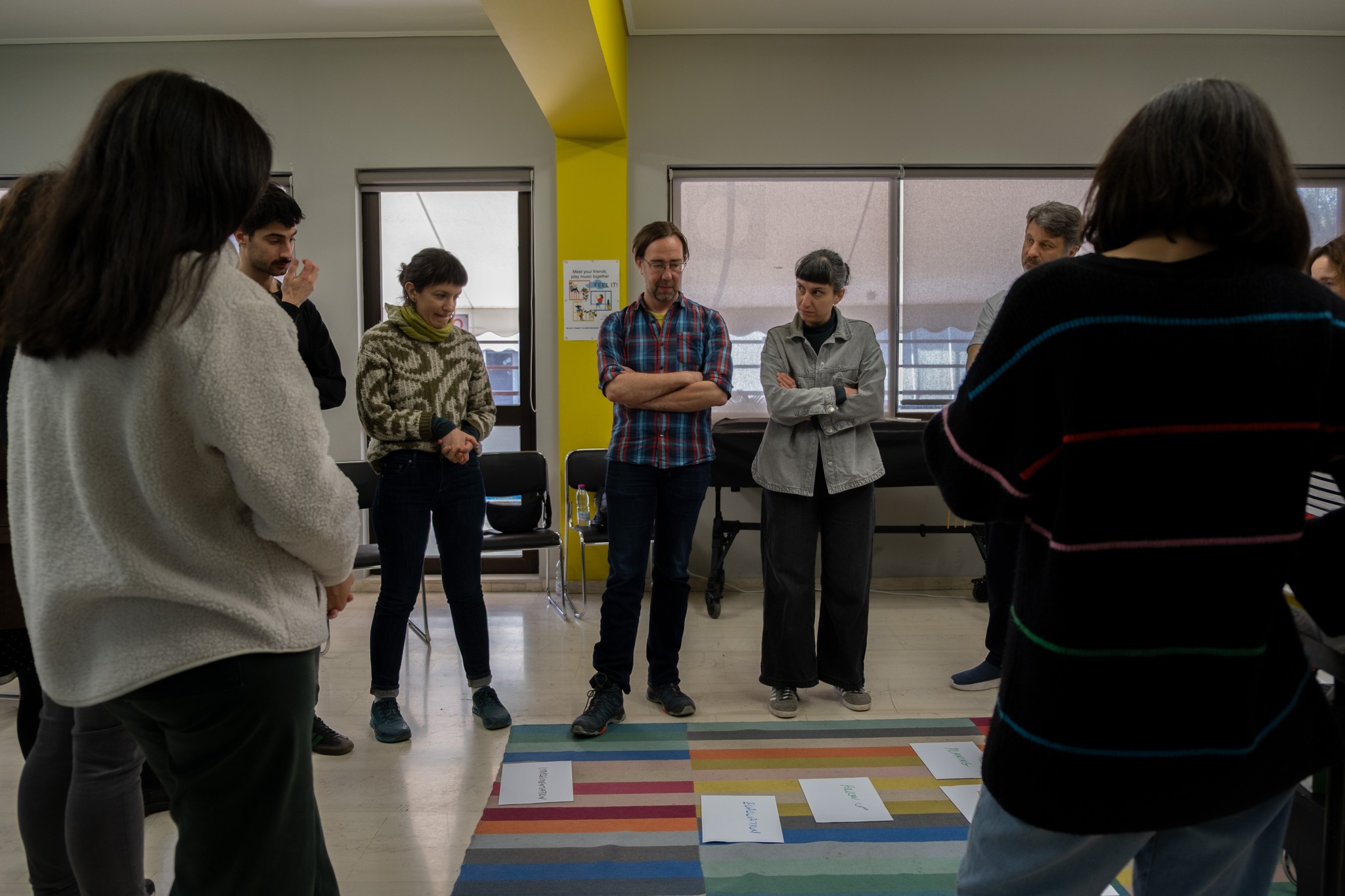
Staff members from civil society organizations and nonprofit stakeholders during the Capacity Building Training on Leadership, Advocacy, and ARTivism. April 2026, Athens, Greece. Photo: ESG.
Like many organizations across Europe, El Sistema Greece draws part of its support from European Union programs. While our work has always focused on music and social change, we’ve recently partnered with organizations beyond the music sector to explore something broader: “artivism” across different art forms. This collaboration has led to the launch of a new project, co-funded with the EU and dedicated to empowering young people, especially those with fewer opportunities.
ARTvocacy for the Union [ART4(U)] aims to support young people in developing transferable artistic skills and to foster inclusion, intercultural dialogue, and active citizenship. The project also encourages youth to engage with social issues through art, promoting creativity as a tool for personal growth and community impact. We pursue these goals through creative residencies, capacity-building, mentoring, and international exchange.
The project emerged as an initiative of MasterPeace, an international non-profit organization based in the Netherlands that is dedicated to promoting peacebuilding, social cohesion, and active citizenship through artivism. MasterPeace operates through a global network of local teams and is active in over 40 countries.
ART4(U) is the expanded version of this project, led by MasterPeace and bringing together partners including MasterPeace Poland; Gerador, a Portuguese project working to open pathways to quality art, journalism, and education; Youth for Exchange and Understanding International, in Belgium; Autres Directions, in the Netherlands; and El Sistema Greece.
Across these countries, art becomes a tool to strengthen democratic participation, inclusion, and freedom of expression.
Inspired by the rotating Presidency of the Council of the EU, ART4(U) follows a TRIO model, a rotating collaboration model in which three partner organizations share leadership, responsibility, and learning throughout the project. This turns the project into a continuous, collaborative journey across countries, rather than a set of separate activities. The process has been further refined through closer alignment with EU policies, ensuring that each phase more clearly reflects priorities such as inclusion, democratic participation, and cultural dialogue, while maintaining flexibility for local adaptation.
Here’s how it works: young people are engaged in three kinds of artistic expression—music, theater, and storytelling—to explore key issues that affect them, such as social inclusion, diversity and intercultural dialogue, LGBTQ+ rights and visibility, gender equality, and youth empowerment. As they create and share the results of their collective efforts, their voices come together to express ideas of inclusion, diversity, and hope for a more peaceful and creative society. In this process, young people and teaching artists become active contributors to social change. Alongside this, mentoring sessions and peer-learning exchanges support students’ personal and professional growth.
The project also organizes public events to engage wider audiences: a concert in Greece, a puppet theater performance in Poland, and a community-based event in Portugal.
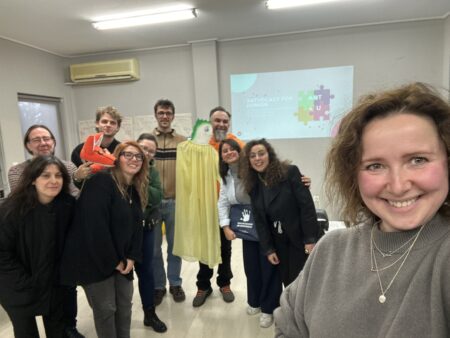
El Sistema Greece hosted the official kick-off of Art4(U) last January in Athens, marking the start of a shared journey. This was followed with a three-day training on Leadership, Advocacy, and Artivism for professionals, and also a dedicated training program for young participants, creating a shared learning experience. A few weeks ago, on June 17, we presented a “Symphony of Inclusion” concert at the Michael Cacoyannis Foundation in Athens. Musicians of different ages, experiences, and backgrounds came together on stage, sharing a repertoire that travelled across musical traditions. More than a concert, it was a public invitation to listen to the voices of young people sending their own messages on participation, coexistence, and solidarity through music. (You can watch a short video excerpt on our YouTube page.)
As the project unfolds, something deeper begins to take shape: young people are not simply participating in a program; they are gradually stepping into a new understanding of themselves and the role they may have in contributing to society. Through rehearsals, collaborations, and shared moments both on and off stage, they begin to realize that they are not only artists, but part of “artivism,” a living ecosystem that carries and transmits values through the arts.
For El Sistema Greece students, music becomes more than practice or performance; it becomes a language through which they express who they are, what they stand for, and the world they want to shape. They discover that their voices and melodies hold meaning and power far greater than they may ever have imagined.
When music serves a message, and the message in turn shapes the music, something deeper happens: art becomes a shared experience that can shift the way we see and relate to the world.
As leading philanthropist Jeffrey Walker puts it, “Solving the world’s biggest problems takes ensembles, not soloists.” Artivism invites us to move beyond individual expression and into shared creation and responsibility.
Contenido relacionado
Destacado, América del Norte, Diseño de programas, Voz y liderazgo de los estudiantes, Enseñanza y aprendizaje, el conjunto
Composición colectiva
Patrick Scafidi

Creación de comunidades, Destacado, Financiación y apoyo, América del Norte, el conjunto
La visión del Gran Sistema
Patrick Scafidi
Construcción de la Comunidad, Editoriales, América del Norte, el conjunto
Del editor, enero de 2019
Patrick Scafidi


