
After Years of Outreach, Brass for Africa Puts Down Roots
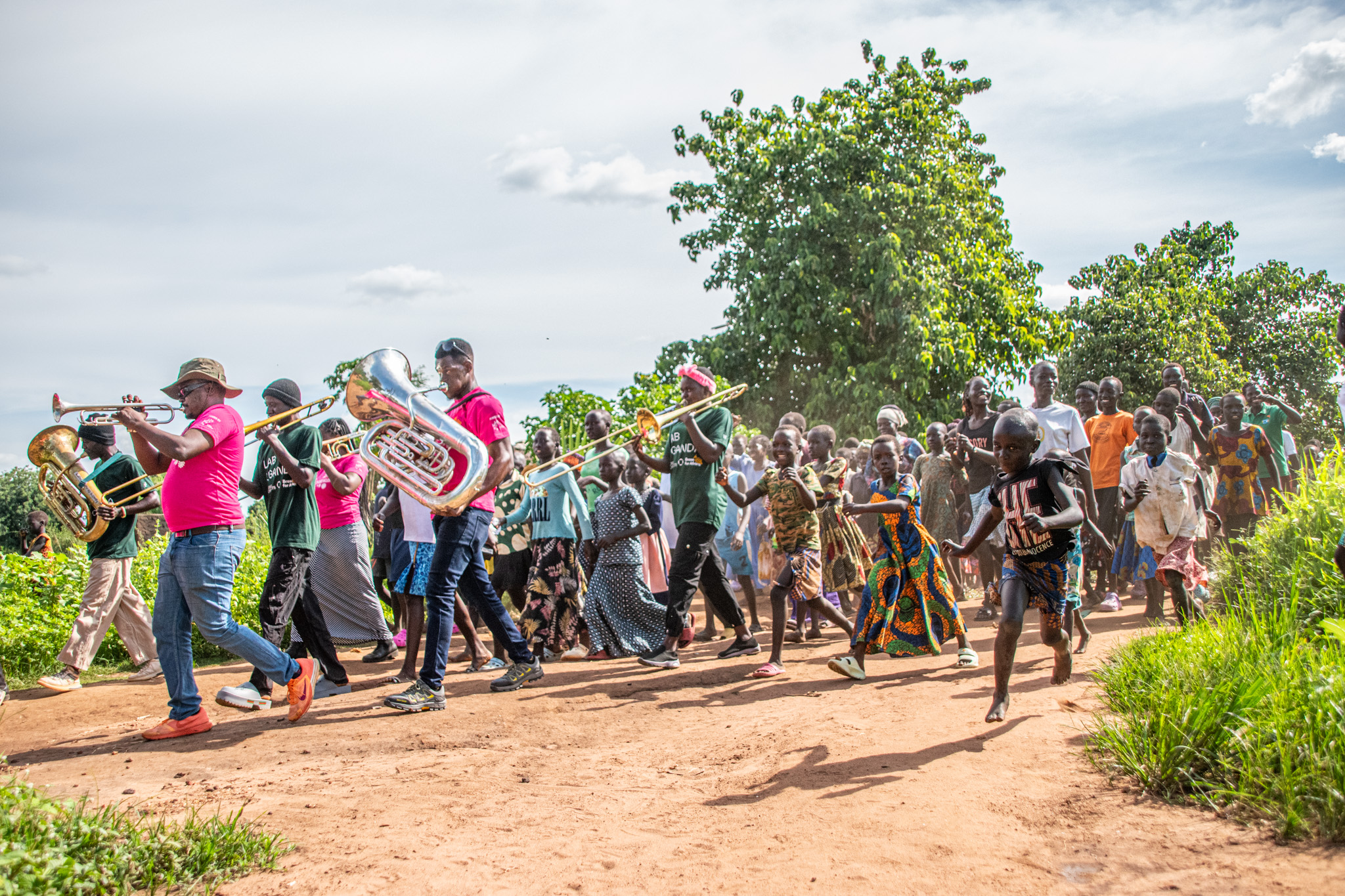
Community march by Alpha Brass Band, Bidibidi Refugee Settlement. Photo: Brass for Africa.
For years, Brass for Africa has worked toward one powerful goal: using music to empower all young people and their communities to fulfill their potential and thrive. Since 2009, that mission has come to life through an outreach model, wherein music and life-skills teachers make long, often demanding journeys across communities.
It worked. It reached thousands. But in 2026, we’re trying something new: the Hub Model.
For us, this is more than a change in our delivery system. It’s a total overhaul of our teaching process, designed to reach learners more efficiently, to further deepen their relationship with music, and, hopefully, to reach many more thousands of young people who need support.
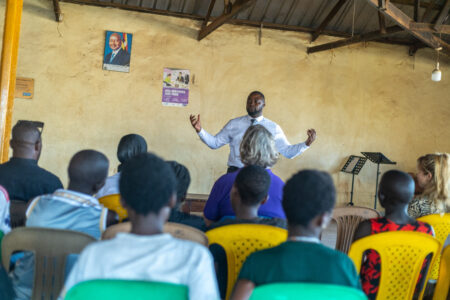
At its core, the Hub Model represents a shift from movement to presence. Instead of teachers spending hours on the road, teams will now be based in specific communities, where they’ll operate from dedicated hubs. Brass for Africa currently maintains a consistent presence in seven communities, operating from hubs—community-based offices—in each. These hubs consolidate a total of 39 former outreach sites into structured, locally anchored programs.
Each is led by a dedicated Hub Coordinator and supported by a team of teachers, creating clear leadership, accountability, and stronger day-to-day programming. From this base, music and life-skills teachers build sustained relationships with children and young people and work closely with local schools and partners.
The Hub Model did not begin as a structure on paper. It began with people. We started this journey by listening, first to our internal teams, then to teachers, heads of department, participants, and partners. We wanted to understand what was working in the outreach model, what was not, and where the real opportunities for growth lay. These conversations surfaced both challenges and possibilities that would ultimately shape a new way of working.
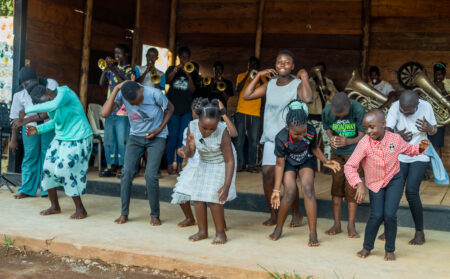
The picture that emerged was clear. Teachers were spending hours on the road to deliver only a short window of teaching time. Communities were experiencing frequent changes in teaching staff, which disrupted continuity and trust. A teacher might spend a year building deep understanding with participants, only to be reassigned elsewhere. Likewise, students sometimes lost motivation when relationships shifted too often. Partners, too, invested in relationships with teams that were not consistently present, while some found it difficult to access our central offices due to distance.
These insights were not abstract. They were deeply human, reflecting frustration, missed opportunity, and a shared desire for something more stable and meaningful.
In close collaboration with staff, we began to reimagine ourselves as community members, rather than visitors. One of the earliest and most significant shifts was the idea of embedding our offices within shared partner spaces, including local government headquarters wherever possible. This held important symbology for us, bringing the organization closer to the people and systems we serve.
We then undertook one of the transition’s most delicate elements: forming the hub teams. Teachers and team members were carefully placed into new networks that aligned with the emerging model. At the start of the year, teams began relocating to their assigned hub communities, supported by headquarters through the transition process. A new role, the Hub Coordinator, was created for former department heads to anchor programs while embedded in a community’s day-to-day life. It was profound to watch our staff embrace these changes.
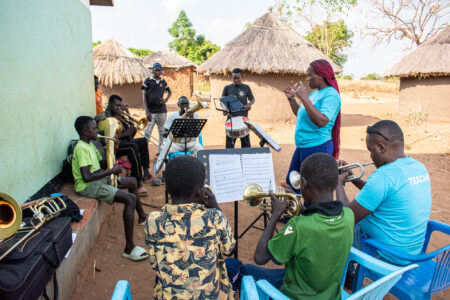
It was also costly: the model demanded resources, time, and a willingness to redesign established systems. Infrastructure had to be adapted, instruments and learning materials redistributed, and staffing structures realigned, made possible through partnerships and ongoing fundraising efforts. Over time, though, we expect our hubs to become more cost-effective and more impactful. By reducing travel demands, it allows teachers to spend more time where they are most needed, in classrooms, in rehearsals, and in meaningful engagement with young people.
In places like Kampiringisa National Rehabilitation Centre in Mpigi District, 60 kilometers from our main offices in Kampala, the difference is already clear. Under our previous model, teachers would travel over four hours to deliver just two hours of teaching before making the return journey to Kampala. Today, that dynamic has changed. Teachers are no longer working against the clock to beat traffic or return the same day, and lessons and rehearsals are deepened as a result. The Kampiringisa hub has grown from 60 participants taught twice weekly to 270 participants three days a week; we project that number to grow to 500.
And this is true for all our hubs. On the whole, we project to grow from 2,500 weekly participants to over 5,000, with a trajectory toward 15,000 participants after three years.
More than any statistic, the Hub Model is about presence. It creates a locally rooted center for musical learning, connection, and opportunity, where relationships are stable, trust can grow, and transformation becomes sustained rather than occasional.
With this new chapter, we move forward with clarity and confidence, reaching further and deeper as we continue to transform lives through the power of music.
Contenido relacionado
Noticias y recursos, Diseño de programas, Investigación, el conjunto
Cuatro planes diferentes de reapertura de colegios, otoño de 2020
Patrick Scafidi

Construcción de la Comunidad, Editoriales, Reunirse, América del Norte, Opinión, Perspectivas y Acción Colectiva, Enseñanza y Aprendizaje, el conjunto
Editorial: Junio de 2020
Dennie Palmer Wolf
Creación de comunidad, Eventos/actuaciones, Destacado, Financiación y apoyo, Reunirse, Diseño de programas, Repertorio, Voz y liderazgo de los estudiantes, Enseñanza y aprendizaje, el conjunto
Compartiendo nuestro trabajo durante COVID-19
Robert Saunders
Destacado, América del Norte, Opinión, Voz y liderazgo de los estudiantes, Enseñanza y aprendizaje, el mundo en general
El Proyecto Amani se asocia con los profesores en formación de El Sistema de Estados Unidos
Akhil Gopal