

A Tree Grows in Oaxaca
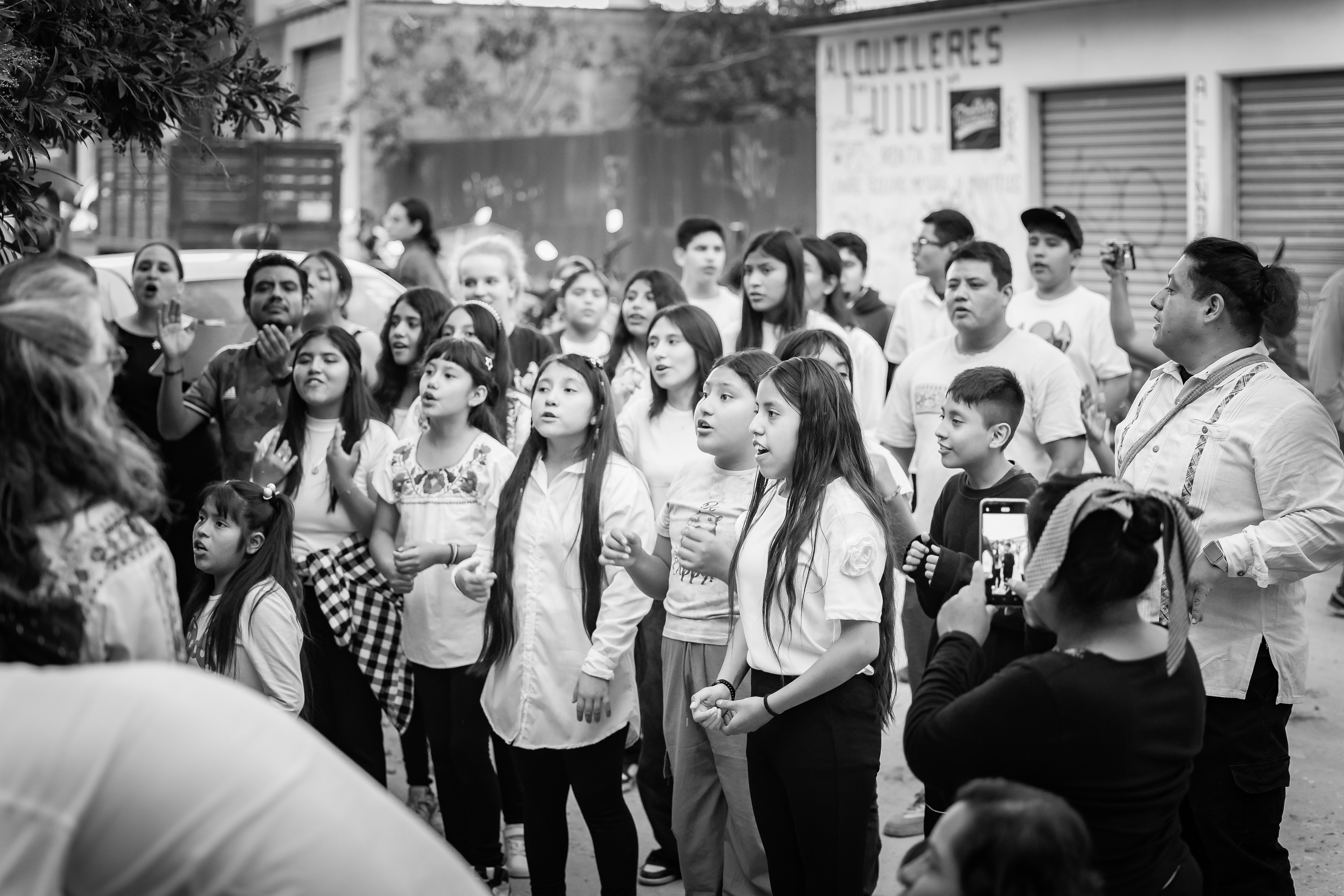
Santa Cecilia choir students.
What is possible when you plant seeds?
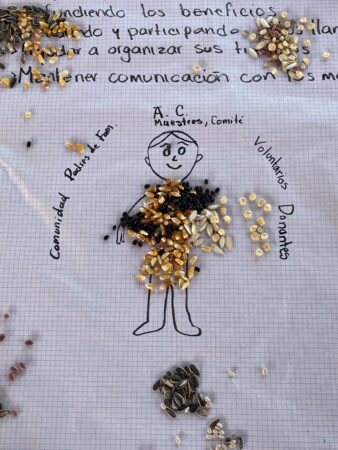
That is the question the Academy for Impact through Music (AIM) team posed to parents after a week of working with children and teachers at Escuela Iniciación Musical de Santa Cecilia (EIMSC), a school one hour south of Oaxaca City, Mexico in Colonia Vicente Guerrero. Parents held handfuls of seeds as they discussed the question in small groups, imagining their children as the seeds. After brief presentations to the wider group, they laid written notes on the floor and scattered their seeds on top. Their children filed in, sat down, and read what their parents had written about them. Then they sang to their parents from that spot—“El Árbol,” a Oaxacan chilena song, composed by Rubén Luengas of Pasatono Orquesta, about a tree gifted by a lover who then waits below it for eternity. Afterward, students accompanied their parents to different corners of the space to teach them the lyrics before singing it one last time, all together.
It was a quiet reversal of roles, and a significant one at a school where learning has mostly been top-down. That reversal is what this piece is about: simple, consistent strategies that strengthen agency and community, the student outcomes for which we all strive.
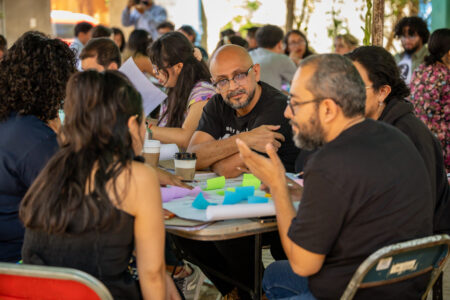
In June 2026, a small team of AIM faculty spent a week at EIMSC. The following week, EIMSC co-hosted Fire Up, AIM’s regional training for program teams. Programs send groups of leaders and teachers rather than individuals, so new ideas have allies when they get home. Over four days, 42 participants from eight programs across Mexico explored the AIM Framework and micro-strategies, watched them in action during EIMSC rehearsals, and joined students in an artistic project that ended in a shared performance. Each team then returned home to run an Action Research project in the fall, testing strategies in their own classrooms with ongoing support from AIM.
The micro-strategies shared with Fire Up Mexico participants were developed at AIM. For Microstrategy #2, I was also inspired by practices found in comunalidad, a concept articulated by Indigenous Oaxacan thinkers Jaime Martínez Luna and Floriberto Díaz to describe a way of life rooted in collective decision-making, shared work, and responsibility to one’s community. Its practices translate beautifully to an ensemble.
Micro-strategy #1: Pause and Rebuild
Mid-rehearsal, stop and ask three questions about a specific passage:
- What worked? What did we like?
- What could we improve, and how?
- What are our most important next steps?
EIMSC students aren’t used to being asked about their own learning, so this was new territory. One student pointed out that the orchestra needed to listen to each other. That kind of insight lands harder coming from a peer than from the podium.
Try it: Anchor the questions to a few bars rather than the whole piece, keep the pause short, and use it often enough that it becomes routine. At Fire Up we used it everywhere, even to jokingly evaluate the coffee break.
Micro-strategy #2: Rotate Roles
AIM’s micro-strategy of Rotating Roles encourages programs to rotate roles with regularity, a practice many of us have experimented with. But certain adaptations were made from taking inspiration from our host location. In many Oaxacan pueblos, community members serve in unpaid, rotating posts called cargos, from village police up to municipal president. They also do tequio, collective workdays for community infrastructure projects.
Here is the strategy: At the start of a month or term, students vote on a group of roles and how long each rotation lasts. Roles might include warm-up leader, tuner, timekeeper, seating assignments, and music librarian. There is also a tequio leader, who organizes everyone to set up and clean the room. After the voted-upon term concludes, everyone rotates.
Despite having shared governance practices within their communities, the culture within a Oaxacan classroom remains typically top-down, so EIMSC students were excited to lead in more areas. EIMSC then turned the strategy on the Fire Up participants, assigning them to committees for everything from washing dishes to stage transitions during the final performance.
Try it: If the work falls unevenly on a few students, resist reassigning it yourself. Ask the group to consider the problem, and let them vote on changes. Students who help design the structure are more likely to take it seriously.
Through these strategies, lessons emerged. Our original plan had EIMSC teachers demonstrating the micro-strategies themselves to Fire Up participants. After the first day of observing, we saw that it wouldn’t work. Teachers arrived at different times, causing many to miss our meetings, and their investment in the project varied, so our own faculty modeled the strategies instead. We learned to design for the attendance we actually had, not the one we hoped for.
It was understandable. Teaching in our field can be isolating. On the first day of Fire Up, one participant pulled me aside and asked: “Is this real? We teachers are always forgotten. Do you really care about us?”
But teachers adopt what is small, concrete, and shared. Before and after Fire Up, we asked participants to describe agency and community as student outcomes and then name practices that point toward them. Before, answers were general, touching on self-reflection and giving students isolated moments of leadership. After, nearly half described a specific strategy of three steps or fewer that they had tried and seen work. A common language turned good intentions into something participants could do tomorrow.
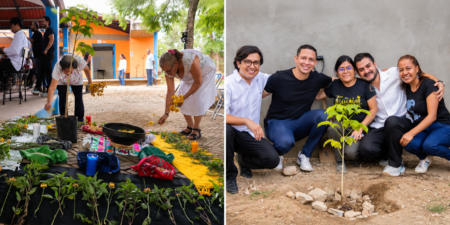
The Guelaguetza is an annual Indigenous cultural festival in Oaxaca. The word comes from a Zapotec term meaning “offering,” or act of mutual cooperation. At the end of our two weeks with EIMSC, we gifted a tree to the school. Beatriz Salinas, Director of local Indigenous rights center Flor y Canto, built an altar and led a blessing ceremony to begin the performance, with the small tree at center stage. After the final performance, the community sang “El Arbol” as we walked the tree to the front and planted it in front of the school. When you plant seeds, sometimes you get a tree that you can stand under forever.
Photos taken by Paulina Rubio and Joel Santi Cortez.
Contenido relacionado
Todas las regiones, Asia, Colaboraciones, Creación de comunidades, Destacado, Reunirnos, India, Voz y liderazgo de los estudiantes, Enseñanza y aprendizaje

La Fundación Baithak trabaja para medir el impacto
Patrick Scafidi
África, Todas las regiones, Colaboraciones, Creación de comunidades, Eventos/actuaciones, Reunirse, América Latina, Noticias y recursos, Norteamérica, Actuaciones
Una colaboración mundial reimagina una canción clásica con un mensaje importante
Patrick Scafidi
Todas las regiones, Asia, Colaboraciones, Creación de comunidades, Oriente Medio, Noticias y recursos
Las plataformas digitales de música cruzan la "brecha Este-Oeste
Patrick Scafidi
Colaboraciones, Creación de comunidades, Europa, Destacados, Reunir, Voz y liderazgo de los estudiantes, Enseñanza y aprendizaje

Redescubrir la alegría en Superar Hungría
Patrick Scafidi


