

Returning to Our Musical Roots: Ravinia Jazz Scholars in Clarksdale, Mississippi
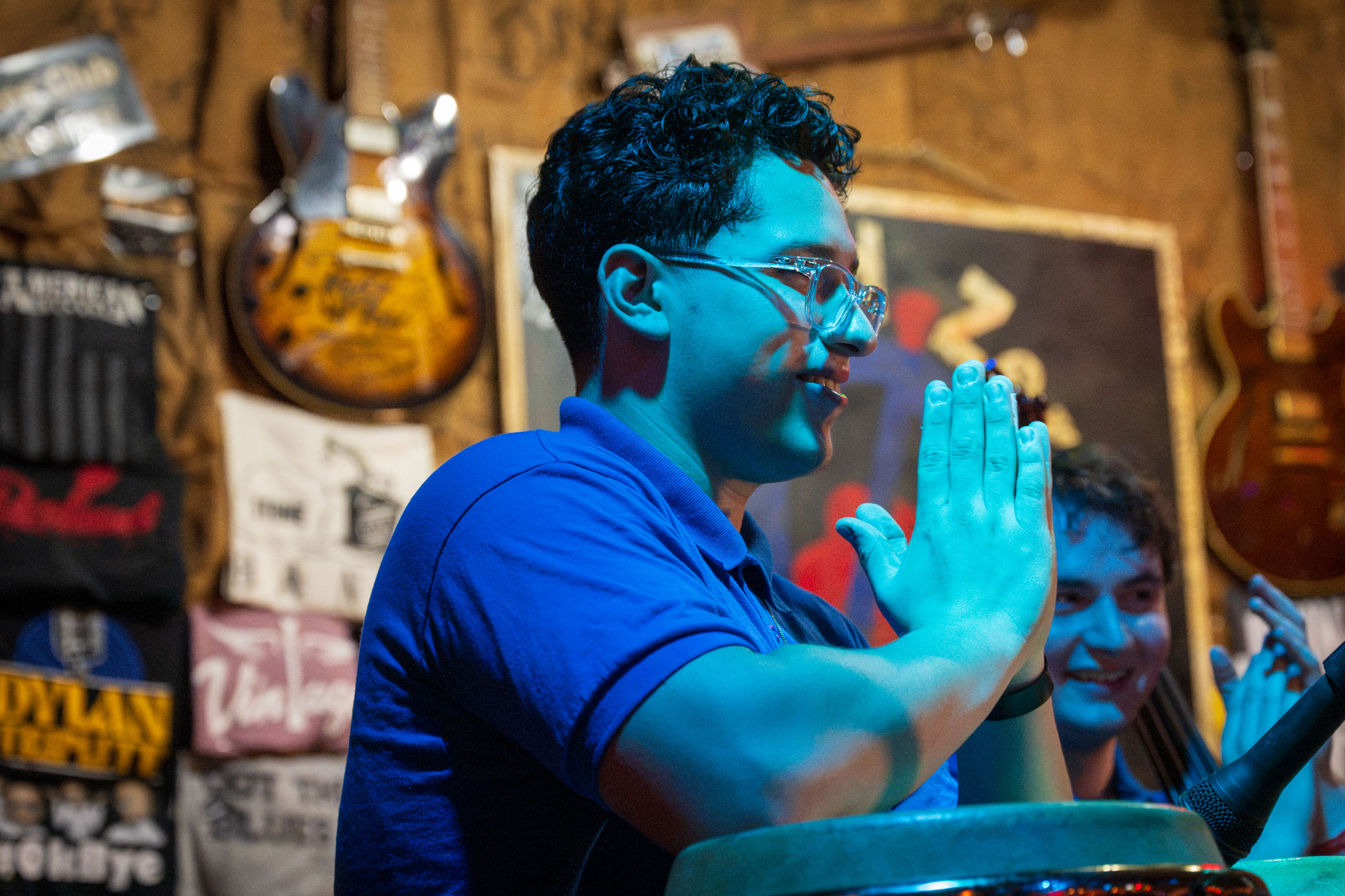
Jazz Scholars Oliver Mendoza, congas, and Andrew David, bass, receive applause following their set. Photo: Ravinia.
Something special happens when young musicians are invited to trace the roots of their art form to its source. This October, a group of high school students from Ravinia’s Reach Teach Play education initiatives had the rare opportunity to do just that through a cultural exchange of jazz and blues music in Clarksdale, Mississippi.
The opportunity came about when legendary American movie star Morgan Freeman and his business partner, Eric Meier, brought their touring “Symphonic Blues Experience” to Ravinia. Freeman and Meier, who co-founded the iconic Ground Zero Blues Club in Clarksdale, Mississippi, 25 years ago, heard those high schoolers—members of Ravinia’s Jazz Scholars program—open the show.
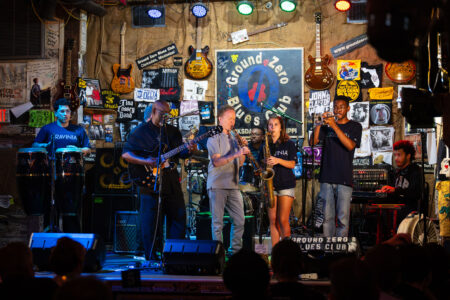
Their reaction was swift: “We have to get these students down to Clarksdale!”
One year later, it happened: five high-school Scholars and two early-career alumni traveled 600 miles from Chicago to the heart of the Mississippi Delta for an immersive residency rooted in cultural exchange, performance, and connection. Accompanied by a group of Ravinia staff and Trustees, the Scholars stepped into the birthplace of the blues, discovering a vibrant cultural lineage where shared musical language became a medium for learning, creativity, and genuine connection.
Music as Common Ground: Connection Across Traditions
Our musical immersion began at the Delta Blues Museum, where our Scholars found an instant connection to the students from the museum’s education programs. We began with a performance of “Sonnymoon for Two,” and as soon as the final notes faded, a young pianist from the museum picked out the melodic line by ear. This sparked a flurry of experimentation and musical noodling, and by the second run-through, the students were launched into shared discovery as they played together side by side. When a Clarksdale guitarist joined the rhythm section, Ravinia guitarist Raffi Lawson held up the chord changes on her fingers, sharing the harmonic progressions across the room in real time. The museum students responded in kind, teaching our Scholars the driving rhythms and signature structures of the Delta blues. There were no charts and no sheet music, only shared musical language and a desire to explore and connect the two musical traditions.
For Raffi, this exchange brought the jazz history she has studied to life. “As jazz musicians, we are taught that the music originates from blues music,” she reflected. “Actually hearing the blues and trying to emulate it in my own sound … I feel like I’m playing truer to the tradition of jazz.” Ravinia bassist Andrew David agreed, observing that this shared lineage created an immediate bridge between two distinct communities. “This rich, shared musical culture and history connects everyone in Clarksdale and Chicago,” he said.
Living the Music: Immersive Learning on a Shared Stage
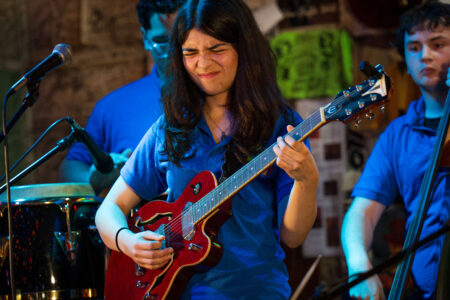
The educational heart of the residency was the Ground Zero Blues Club. Over the course of three consecutive evenings, the Ground Zero stage became a learning lab for our Scholars to cultivate new language, confidence, and connection through music.
Local Blues artists generously shared their craft, inviting our Scholars to sit in on tunes and treating them as musical peers. The joy surrounding the stage was palpable: to see the beaming faces of the musicians as they performed, and to watch the audience respond with cheers and dancing, was to experience the impactful nature of sharing musical traditions and experiences.
For Scholar Oliver Mendoza, a 17-year-old Latin percussionist and drummer, the experience opened new creative horizons. “Playing with the local Mississippi Blues musicians, that’s a completely different world. I’m used to the Chicago language, and I’m getting to learn a whole new language,” he said. He marveled at how the collaboration expanded his view of musical expression. “The way any musician expresses their art, their emotion through their instrument. I’m hearing the emotion. I’m hearing the stories being told with the music. The music, the people, the environment filled my own spirit with life.”
Pathways and Connection: Key Principles for Impact
Our time in Clarksdale reinforced three key practices that have enabled us to harness this experience into lasting impact and growth, and we share them with the hope that our kindred programs across the world will find them useful!
Near Peer Pathways: Embedding Jazz Scholar alumni into the cohort provided a visible pathway for the current Scholars to envision their own career possibilities. Raffi noted the impact of this setup: “It’s a pretty special thing to do something like this with musicians that have been through the same experience and represent who you will be in a couple years.”
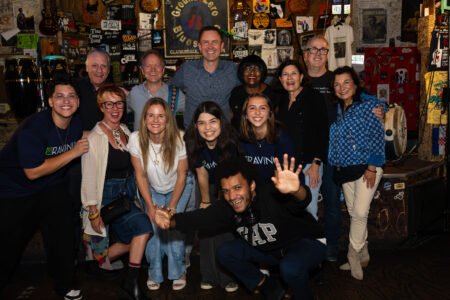
Institutional Connections: A number of Ravinia Trustees and staff were immersed in the residency alongside the Scholars, creating a unique opportunity for connection across generations and backgrounds. Trustees, staff, and students shared family-style Southern meals, walked historic Civil Rights sites with local leader Brenda Luckett, and sat together at Ground Zero. For Trustees, witnessing the Scholars’ artistic rigor in real time demonstrated the impact their investment creates. For the students, seeing organizational leaders in the front row provided deep, personal affirmation of their support. “It was awesome to have the Ravinia patrons there,” Scholar Victoria Chapin noted. “They were big supporters of us whenever we got to play.”
Immersive Learning Experiences: Designing an immersive learning experience through this residency cultivated a space where the Scholars had agency and freedom to explore their musical voice. By surrounding the Scholars with music—from the lofts they stayed in directly above the Ground Zero Blues Club to collaborations with mentors and peers—we ensured that the history, culture, and traditions of the Delta Blues could be experienced and internalized in a way that will meaningfully shape their artistry and understanding of jazz.
Our Scholars returned home to Chicago with confidence, a clearer vision of their own artistic pathways, and a deeper connection to their musical roots and community. In a joint thank-you letter to Ground Zero, they captured the heart of this work: “We were reminded that music is not only about the notes we play, but also about the people we meet, the stories we learn, and the communities that keep musical traditions alive.”
Related Content
Europe, Gather Together, Professional Development
FEATURE: El Sistema Academy – A Next Step in Our Learning
Patrick Scafidi


