

EDITORIAL
To Conduct, We Must First Breathe
I have traveled and taught in nearly 45 countries: at an orphanage in Greenland, in refugee camps, and alongside migrants and refugees who escaped war. I learned to teach when words were not enough, and to build community through music. Somewhere along the way, I forgot something essential: to support others, we also need support.
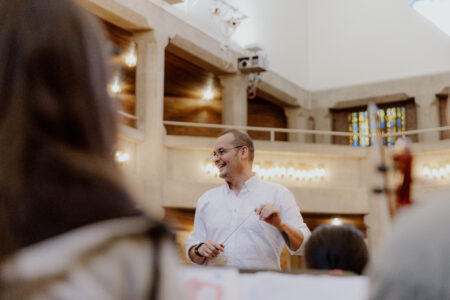
We can fulfill every commitment while losing touch with ourselves. We can conduct an enthusiastic rehearsal, watch children leave smiling, and arrive home empty, unsure where tomorrow’s strength will come from. Doing extraordinary work and bringing positive energy does not necessarily mean we are well.
For me, that exhaustion has another layer. I am a migrant, living far from where I grew up and received my musical education, learning to inhabit another language and culture while Venezuela endures a devastating crisis under a dictatorship. The people I grew up with are scattered across the world. While accompanying others through displacement, I carried my own quietly.
The hardest part was not being able to sleep. At night, I kept searching for ways to help, even when there was nothing more I could do until morning. I worried about my students’ immigration problems alongside my own personal difficulties. How would I find the money to pay my team? How could I convince organizations to see the needs of the children and their communities beyond the sponsorship opportunity? I could go for months with headaches, sometimes feeling dizzy, always feeling that whatever I did was never enough.
October 10, World Mental Health Day, reminded me of something I am still learning: to listen to myself as carefully as I listen to my students. Whether we find ourselves unable to sleep, or sleeping far more than usual, we need to pay attention to changes in our bodies and minds. We may still smile, teach, and inspire others while living with depression or anxiety. I am learning not to measure my wellbeing only by how much I can still do.
Life does not pause because we have a mission. There is grief, family trouble, and loss alongside joy, profound emotions, and meaningful learning. Yet those of us working for a social cause can convince ourselves that we must always be available. We begin believing we are superheroes, that loving music will give us endless strength. We are mistaken.
I often say, “I want to replace the sound of bombs with applause. With the sound of a trombone.” For many students, bombs are part of their history. Music must offer somewhere they can feel safe, heard, and capable of creating.
But offering that space asks more of us than musical knowledge alone. In a 2023 YouSound report on Dream Orchestra, sociologist Dr. Alix Didier Sarrouy documents the emotional pressures of this work through a month of fieldwork in Gothenburg. The report includes my account of students calling at two in the morning because they were experiencing anxiety or panic attacks, had been refused asylum, or feared being sent back to Afghanistan. I had told them, “You can call me any time.” Behind those late-night calls was a young person, frightened about what would happen next, reaching for someone they trusted.
Other teachers described pain, anger, frustration, and powerlessness. The report also describes a constant reminder in our staff meetings: we are teachers, not psychologists. When students carry tragedy, they need a compassionate word and an adult who listens. Sometimes they need more than we can provide. Our relationship of trust can become a bridge to professional support. Recognizing our limits is part of caring and the person answering the phone needs care, too.
Sometimes everything seems to shake at once: a call from your family tells you that two earthquakes have struck Venezuela, while students you teach face deportation. You try to remain steady for everyone while absorbing the uncertainty yourself.
That’s when you need your own levare: the preparatory gesture that gives you space to breathe before beginning again. We plan rehearsals, projects, and applications. We must also plan our oxygen: rest, honest conversations, and time for ourselves.
If your strength begins to fail, remember the eyes of the child when you first placed a violin in their hands. Let that memory remind you of the connection you helped create, and remember that you deserve care too. Seek professional support. Talk to colleagues. Make room to breathe, move, rest, and feel. Your worth does not depend on how much you can carry.
I wanted to write these lines for you who pour your heart and soul into making this world a better place, especially amid the chaos we are living through. Your care matters. Your life and wellbeing matter too.
Before an entrance, the orchestra breathes. Remember: to conduct, we must breathe too.
Related Content
Gather Together, Latin America
Signed, Sealed, and Performed – Portugal and Venezuela
Patrick Scafidi
Europe, Events/Performances, Gather Together
Sistema Europe Youth Orchestra Takes Milan by Storm
Patrick Scafidi


