Latin America


Solving the Instrument Crisis in Global Music Education Programs
Graciela Briceno, Program Manager, In Concert Opus Network
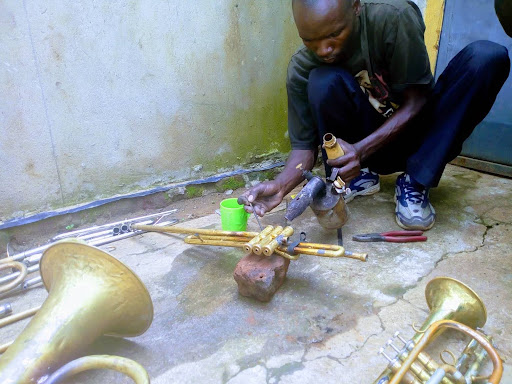
The image is jarring: a vibrant green lawn scattered with brass instruments in various forms of disrepair, some rusted, others broken or bent. A few rest in old cases with broken hinges. This video was shared by Kyewalyanga Fredrick (Freddie), founder of Saved by Music Foundation, a nonprofit in Uganda that serves 111 children between the ages of 8 and 16. Alongside shelter, food, healthcare, and school fees, the program teaches music through the Elgon Youth Brass Band that rehearses every day. Unfortunately, like a majority of programs in the region, Saved by Music Foundation does not have enough playable instruments for all of its students.
Through Songwriting, Colombian Communities Resolve Conflict and Make Their Voices Heard
Ana Uribe Law, musicologist and violinist; 2023 Alumna, Global Leaders Institute
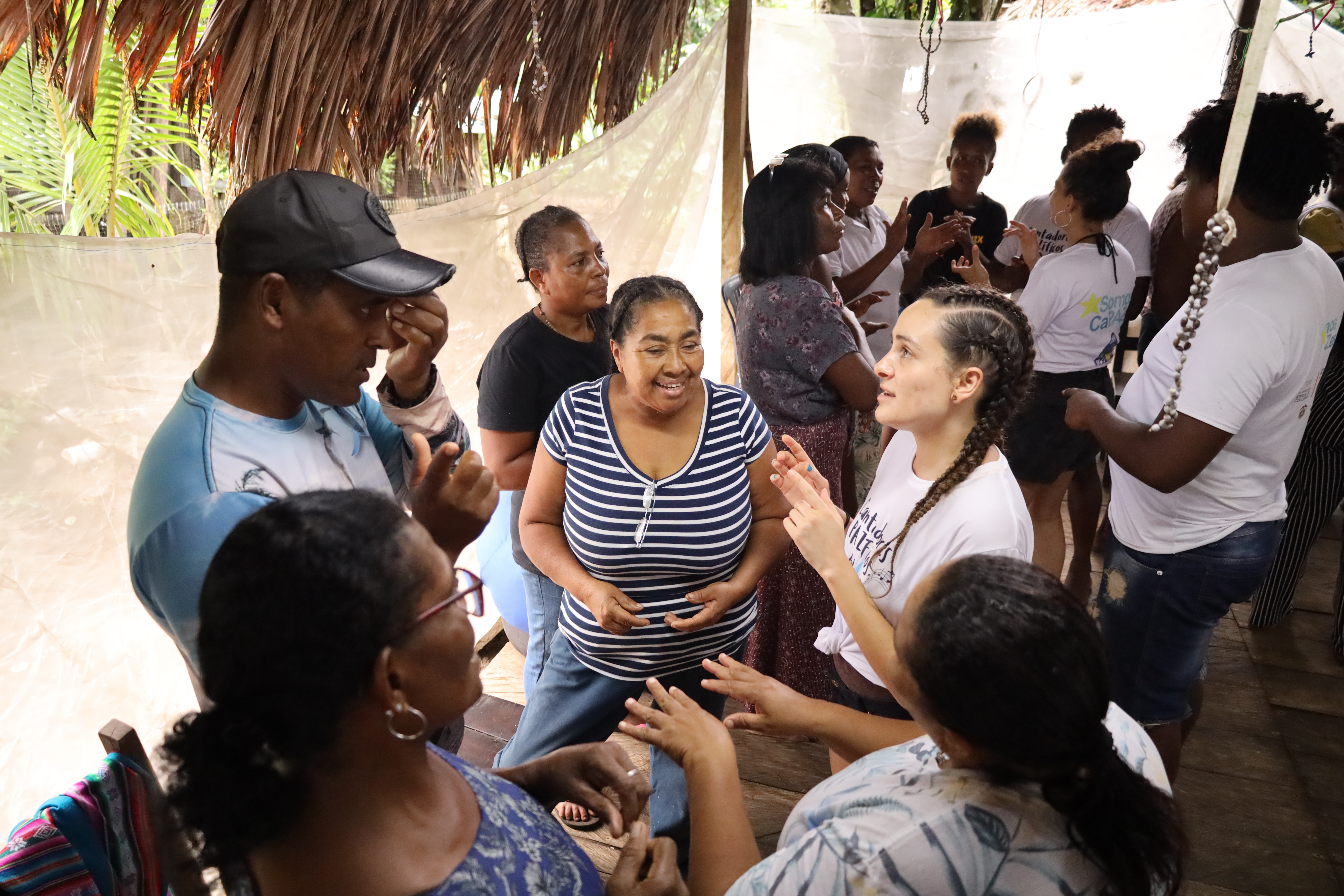
Ask any Bogotano about their perception of Colombia’s Chocó Region, and you’ll likely hear that it is a dangerous and remote place, visited primarily for whale-watching. These inter-regional biases are not uncommon—decades of armed conflict have disrupted networks of community and social cohesion, fragmenting them and threatening the practices that sustain communal life. And though a shared sense of Colombian identity exists, each of the country’s regions maintains a distinct cultural character that is often rooted in music.
Before traveling to Chocó, my perception of Colombia’s outer territories was similarly close-minded.
U.S.-Venezuela Relations Impact Music Exchange Programs
Musical exchange programs between the U.S. and Venezuela have recently hit an impasse with new travel restrictions between the two countries.
Teacher Learning through the Spark of Action Research
Francis Gagliardi, Program Director, Nucleo, London, England; member of first Firebird team at the Academy for Impact Through Music
How can I contribute to making something that’s already great even better?
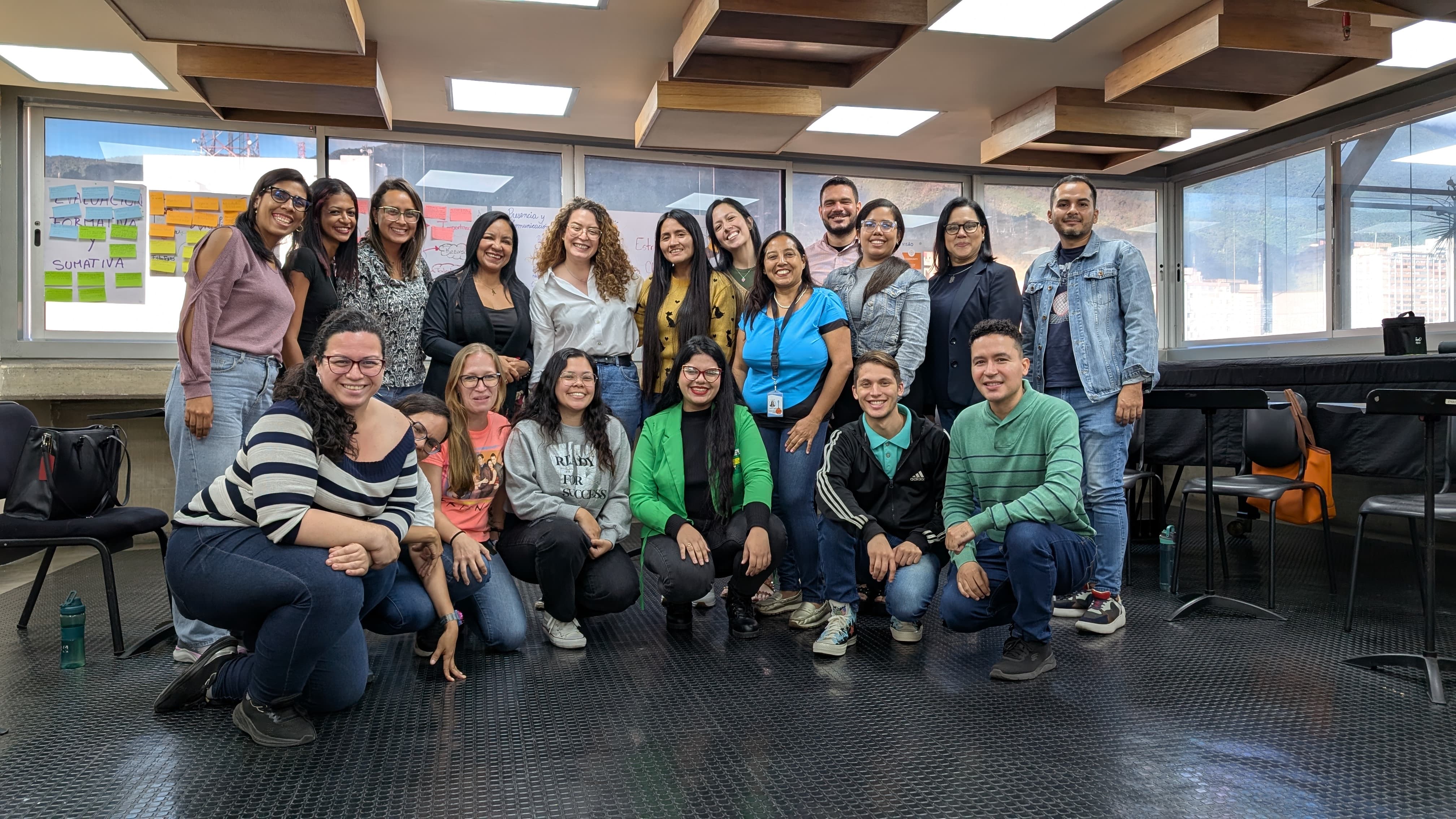
That was the question I asked myself when I took on the challenge of carrying out the first Academy for Impact Through Music (AIM) Chispa, in Caracas, Venezuela, in December 2024.
Between Tradition and Innovation: Reimagining Teacher Training at NEOJIBA

José Henrique de Campos, Educational Director, NEOJIBA
When trying to renew an initiative that has existed for almost a decade, our great challenge is to find that precise balance between valuing tradition and proposing something new. At NEOJIBA State Nuclei for Youth and Children’s Orchestras of Bahia, this balance is fundamental to our continuous search for improvement—praising what already works, recognizing what can be improved, and having the tranquility to suggest something innovative without losing the essence of an idea.
It was in this spirit that in 2023, on a sunny afternoon during Bahia’s “eternal summer,” we began to redesign PROCEC, our collective teacher training program.
EDITORIAL
Reflections on the 50th Anniversary of El Sistema Venezuela
Rodrigo Guerrero, Staff Specialist for Diversity, Equity, and Inclusion at Babson College, Massachusetts, USA; former Associate Director of International Relations and Institutional Development, El Sistema Venezuela
The Venezuela of 1975 is in sharp contrast to its current reality. Fifty years ago, the country was fully reconstructed after an oppressive military dictatorship and on track for economic growth. That was the context in which a young, brilliant composer and conductor, who also happened to be a gifted politician, used his combined talents to convince the government to support something that felt out of place to officialdom, but, in his vision, right at home.
NEOJIBA Conecta Celebrates Closing Concert
The NEOJIBA Conecta project celebrated their closing concert at the end of July, with a program reflecting the cultures and traditions of participating musicians from the Global South.
Sinfonía por el Perú, an Experience of Social Innovation

César Oré Rocca, Executive Board Member, Sinfonía por el Perú
Right away, during the program’s first year, positive effects were obvious. In fact, the music’s potential seemed to go beyond the ability to learn a new skill or develop cognitively; it seemed like a means to tackle all sorts of issues—self-esteem, tolerance, cooperation, communication, dialogue, self-care, self-determination, and so much more.


