
Topics
News & Resources
In Jerusalem, a Space for Healing
Micah Hendler, Founder & Artistic Director, The Jerusalem Youth Chorus
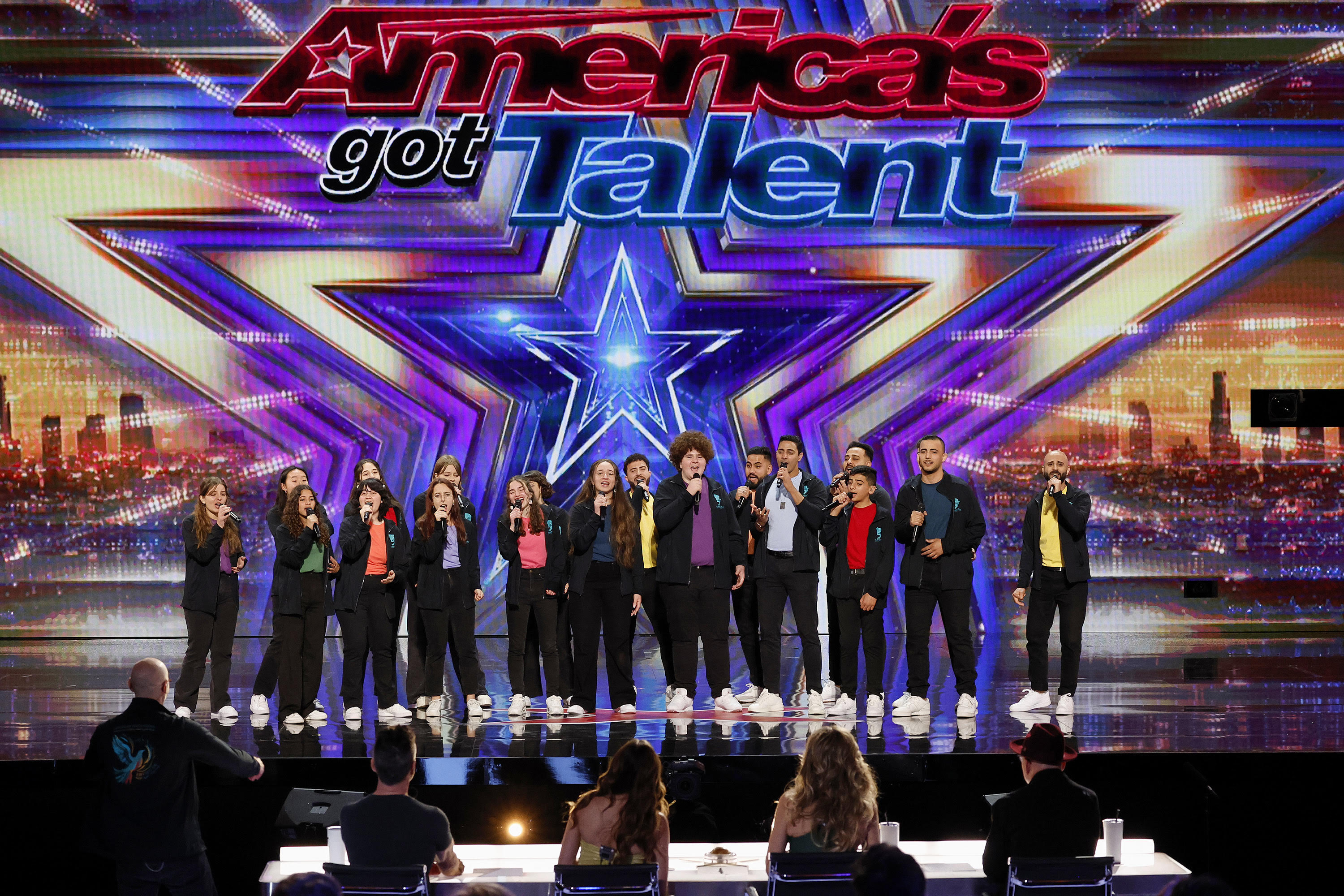
Photo: Jerusalem Youth Chorus appearing on America’s Got Talent.
The Jerusalem Youth Chorus (JYC) is a music and dialogue program for Israeli and Palestinian teenagers in Jerusalem. We bring young people from East and West Jerusalem into the same room each week to sing together, practice structured dialogue, and build the leadership skills needed to navigate a deeply unequal and polarized reality.
If you work in music for social change, none of that is conceptually new—“music builds connection” is something we all believe. What has surprised us over time is how much the container matters. Singing helps, of course. But the real work is creating a space that is reliable, rigorous, and emotionally safe enough that young people can stay in relationship even when everything around them pushes them toward separation.
Each Monday and Thursday at 4:00 p.m., 45 teenagers between the ages of 13 and 19 gather in our rehearsal space for JYC’s twice-weekly meetings. The easiest way to summarize these meetings is to call them a “music/dialogue sandwich”; we begin with vocal warmups and singing together, break into our dialogue sessions, and re-gather to sing again. Our repertoire each year is selected through a careful process between staff and singers, ensuring that our songs equally represent Arabic, Hebrew, and sometimes English; include traditional Jewish and Arab music in addition to current pop songs; and thematically relate to the lived experiences of our singers.
Our music is then used as a container for our structured, four-year dialogue curriculum. Professionally facilitated and translated, and held in both uni-national and bi-national sessions, our curriculum creates brave spaces for our singers to learn about and discuss issues such as listening and empathy, identity and stereotypes, history, dual narratives, storytelling, and case studies of violent conflict. After the dialogue session, our singers come back together as a group to finish their music rehearsal for the day, as a literal and metaphorical form of reuniting and creating something good together.
One of the biggest lessons from our experience is that “together” doesn’t happen automatically just because people share a rehearsal room. We’ve learned to be explicit about what togetherness requires: clear boundaries, thoughtful facilitation, shared agreements, and a culture where discomfort can be named without becoming a personal attack. In practice, this means we treat dialogue like a skill—not an open mic—and we build it the same way we build musicianship: through repetition, reflection, and support.
Since October 7, 2023, that structure has mattered even more. Many peacebuilding programs suspended operations during this period, but our singers continued to meet. Not because everyone felt ready or aligned (they didn’t), but because the chorus had already built habits of showing up—habits that turned out to be stabilizing when everything else felt unstable. It’s a reminder that in conflict contexts, consistency isn’t just a logistical goal; it’s part of the intervention.
Another takeaway we’d like to share with colleagues: performance can be powerful, but perfection is not the point. We think of performance as a form of public storytelling—an invitation for audiences to hold complexity, not a moment to wrap up everything neatly with a bow. When our teens share their music and stories, we try to make sure the message isn’t “see, we solved all the problems and the world is actually fine” but rather: this is what it looks like when young people refuse to dehumanize each other, even when it would be easier to stick to the status quo—and we need you to join us in that process of rehumanization.
For anyone building similar programs, we’d love to compare notes on the questions we’re still working through. How do you hold a space internally where multiple truths can be welcomed, while also sending a message as an ensemble that isn’t just about what you do internally but is also responsive to the realities that surround you, about which there may be profound disagreement in the group? How do you support young people when the conflict is not abstract but lived daily, and when it contains both symmetries (like growing up being taught to hate/fear the other based on dehumanizing stereotypes) and asymmetries (like a grave imbalance of power)? And how do you sustain a long-term model—one where connection is not a one-time breakthrough, but a practice? Grateful for your thoughts and your work in your corners of the world.
To watch the Jerusalem Youth Chorus’s performance on America’s Got Talent, please click here.
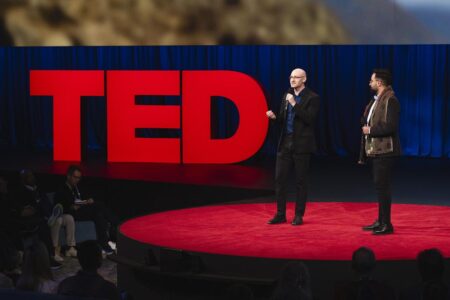
To watch the TED Talk “An Anthem for Peace and Justice From Israeli and Palestinian Youth,” featuring Micah Handler, Amer Mohammed, and the Jerusalem Youth Chorus, please click here.
Related Content
Latin America, the world ensemble
Orquesta de Peñalolén: A Source of Community Pride in Santiago, Chile
Patrick Scafidi

Asia, Asia/Oceania, Program Design, Teaching & Learning, the world ensemble
El Sistema Hong Kong
Patrick Scafidi
Community Building, Featured, North America, Program Design, Teaching & Learning, the ensemble
Illuminating True Progress for All Students
Patrick Scafidi