

Topics
News & Resources
EDITORIAL
Practicing Collaboration
Angelica Cortez, Executive Director, Suzuki Association of the Americas
In arts education programs, we tend to work with our heads down. Doing our work every day is enough: it takes more time than we have to create our lesson plans, to build healthy organizational infrastructure that is adaptive and responsive, or even to collaborate with the colleagues within our own organizations. As artists and arts leaders, we forget to look up and out. But as various crises combine forces to pull us away from each other, our need for collective work is not something we can afford to have on a backburner. It needs to be a central focus. We need to build strong local networks and to diversify our collaborators.
We need to connect—with fellow arts organizations, and with organizations we might never consider in our daily work.
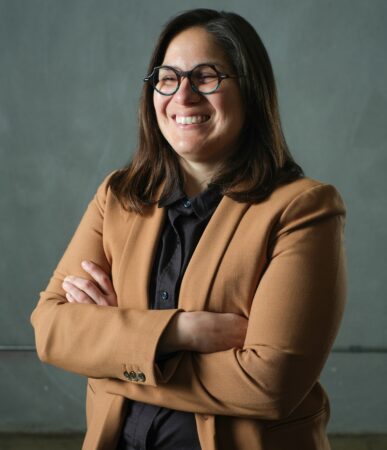
I am privileged to wear many hats. At the Suzuki Association of the Americas, I work alongside an international community of learners committed to advancing the Suzuki Method. As an educator at the University of Southern California, I work with young leaders reshaping the arts industry as artists, entrepreneurs, executives, and culture bearers. I consult on projects that analyze how culturally focused arts institutions are impacted by the philanthropic landscape. And before joining the Suzuki Association, I worked in the global field of El Sistema, supporting teachers and administrators in creating access to music education.
These roles fill me with endless gratitude and joy. Every day, I watch colleagues and collaborators meet and overcome unexpected challenges. They have also afforded me a birds-eye view of the field. From where I’m sitting, arts programs have a connection problem.
It’s easy to see why. Globally, we face compounding, interconnected crises. The COVID-19 pandemic was a remarkable example of how fragile our ability to engage with one another is; many of us spent years teaching online, unable to make music for an audience. The United States administration continues to impose unpredictable tariffs that impact our global economy, strain long-standing international relationships, and threaten interference with several Latin American countries. The performing arts industry has been impacted by immigration procedures, limiting its ability to showcase international artistry. Large language models are being integrated into our world more quickly than most arts institutions can keep up with, and artists and arts leaders are rightfully anxious about its impact on their ability to work. Calls for justice, equity, and more human-centered leadership continue to clash with a capitalist economy that centers profits over people.
It’s no wonder we bury ourselves in individual silos. But we won’t find solutions by staying in our respective lanes. Rather than press against each other, point fingers, yell online—I’m guilty of this one—we must do what we ask of our students: learn from each other, advocate for one another, and think and act in new ways.
There’s no single way to do it. The Suzuki Association, which has historically organized its own biennial conferences, has begun co-locating its conferences with the American String Teachers Association (ASTA). The collaboration has brought both organizations’ communities under one roof, with content unique to Suzuki teachers, unique to the ASTA community, and relevant to all. Our teams can leverage each others’ organizational strengths and structures, and we learn from one another while centering our members’ experiences—offering a bigger audience for exhibitors and a more robust experience for attendees.
Then there is the Music Is Education Coalition, which was developed by individuals from several associations and music organizations. As part of a broader effort to improve advocacy and increase access to funding, they have built an AI assistant—Karl B—that will answer questions you might have about resources for advocacy in your state, what coalitions you might join, and what local collaborations might better support your arts education ecosystem.
El Sistema USA partnered with the Polaris Dawn space mission to create a free curriculum resource for the music industry. We saw the Los Angeles Philharmonic and Gustavo Dudamel on stage with CA7RIEL & Paco Amoroso at Coachella, proving that orchestral music belongs on any stage, not just in the concert hall.
Perhaps a community food bank wants to host a potluck, and needs a space to hold it in, or perhaps your students want to offer their musicianship at a local food bank. Perhaps you, like me, have to work harder to reach out for coffee or a virtual call with colleagues. Or perhaps you notice that your first instinct is to solve the problem you’re facing, before you reach out to the friend you know has solved this problem before.
Let this be a friendly nudge toward collaboration and connection, no matter how small. Wherever you work, your charge is simply to connect—with people, with organizations, and with communities, even (or especially) unfamiliar ones. The problems we work every day to solve are deeply connected. Let’s make sure we are, too.
Related Content
All Regions, Collaborations, Community Building, Events/Performances, Gather Together, News and Resources, Professional Development
Students in the League of American Orchestras
Patrick Scafidi
All Regions, Collaborations, Community Building, Events/Performances, Gather Together, News and Resources, Professional Development
Apply for ESUSA’s Youth Leadership Institute
Patrick Scafidi
All Regions, Collaborations, Community Building, Events/Performances, Gather Together, News and Resources, Professional Development
Creative Economy Career Pathways for Youth
Patrick Scafidi
Collaborations, Community Building, Europe, Featured, Gather Together, Italy, Program Design, Teaching & Learning
A Living Network Meets in Milan
Patrick Scafidi


