

Through Songwriting, Colombian Communities Resolve Conflict and Make Their Voices Heard
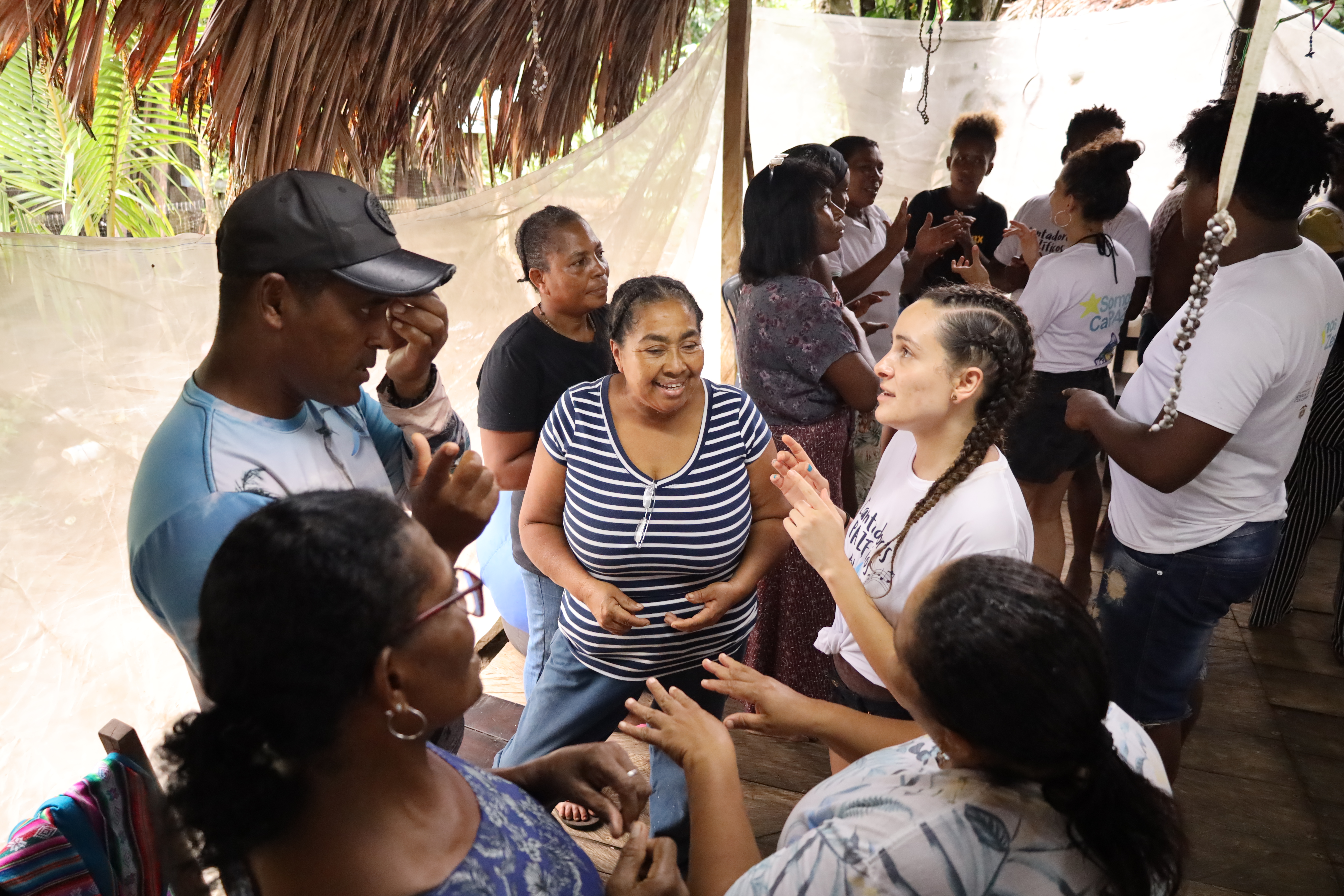
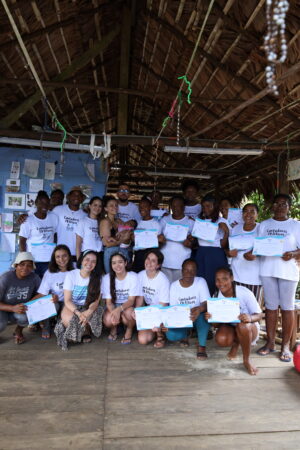
Cantadores PAZíficos participants with Paula Van Hissenhoven (musician-volunteer) during activity in Jurubirá. Photo: David Díaz.
Ask any Bogotano about their perception of Colombia’s Chocó Region, and you’ll likely hear that it is a dangerous and remote place, visited primarily for whale-watching. These inter-regional biases are not uncommon—decades of armed conflict have disrupted networks of community and social cohesion, fragmenting them and threatening the practices that sustain communal life. And though a shared sense of Colombian identity exists, each of the country’s regions maintains a distinct cultural character that is often rooted in music.
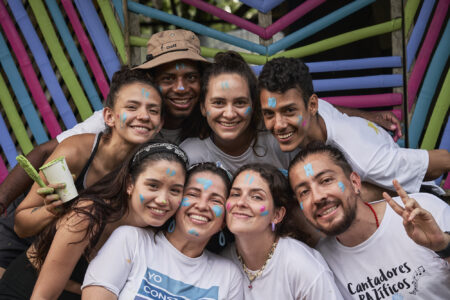
Before traveling to Chocó, my perception of Colombia’s outer territories was similarly close-minded. That changed after I was connected with Somos CaPAZes, a Colombian nonprofit that aims to help participants achieve peace within their communities. (Their name is derived from the Spanish words “capaz,” which means “to be able” and “paz,” which means “peace.”) I had been given a chance to join their Cantadores PAZíficos volunteer program, which works with communities and families to improve conflict resolution and foster mutual understanding. An initiative of Somos’ artistic program Al ComPAZ, and inspired by Carnegie Hall’s Lullaby Project, Cantadores PAZíficos promotes peace through collective song composition, using music to foster belonging and strengthen social ties where violence might have eroded them. After ten days visiting the Chocó corregimientos (villages) of Jurubirá and Coquí, I saw the region for what it is: a rich cultural hub full of voices that need to be heard.
Our team was composed of ten members, all from different backgrounds. Two Somos CaPAZes leaders, one Somos CaPAZes practitioner, one photographer/psychologist, four musician-volunteers (including myself), and two youth leaders from Nuqui who served as our link to the communities. We met in Bogotá for a short training session, where we got to know each other, broke the ice, and collectively brainstormed solutions to problems we thought might arise during our visit. Biases were apparent immediately, with many of us assuming a degree of resistance from people we assumed to be more prone to conflict. Thankfully, our leadership team helped us reframe our thinking: the positive perspectives we hoped to foster in each corregimiento had to first be fostered in ourselves. We departed Bogotá as collaborators and mutual learners, not as teachers.
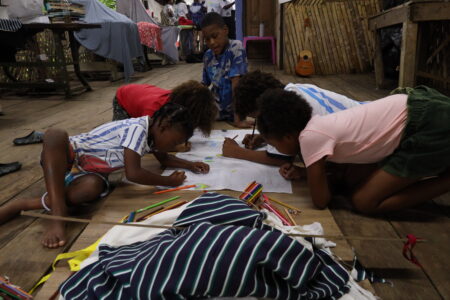
In both Jurubirá and Coquí, we worked through nine activities with participants. Initial workshops revolved around deconstructing what conflict means and can signify, exploring healthy conflict resolution strategies, and thinking about our difficulties expressing ourselves. Our next phase was letter-writing; based on the Lullaby Project’s practices, participants wrote letters communicating their feelings, which would then be turned into songs.
We were surprised and delighted to see more participants than we had anticipated, especially after the first day, once word had spread about our workshops. But there were still difficulties along the way. Perhaps the main challenge—one that the team felt intensely in Coquí—was how to present ourselves without seeming too foreign or authoritative in “correcting” a community’s understanding of life. That felt especially relevant among those severely affected by unjust and traumatic political and drug wars. One’s privilege is felt most strongly when sitting next to someone who has experienced true oppression in the course of trying to meet basic needs. Acknowledging their pain and strength was the least our team could do, but the letter-writing exercise was where the ice was really broken. Where speaking felt too difficult, written words helped: letters to kids, to parents, and even to themselves, communicated powerful feelings of pain, resolve, and leadership.
This was no small thing: with such small populations, these corregimientos have passed down ideologies for generations. Hard debates emerged during group discussions about conflict resolution. Younger mothers, for instance, were more eager to break away from the harsher methods of their parents. In order to accommodate and naturalize those feelings, we ended up hosting an impromptu bichera, or community meal, on Day 2 in Jurubirá. Rather than cut off progress to leave and prepare lunch for their families, participants continued exploring their feelings within the larger community, while we volunteers observed and connected with that community’s daily life.
In total, nine songs were written, rehearsed, and recorded during the Cantadores PAZificos program. During the songwriting process, locals guided the ideas while we merely assisted with the necessary musical connectors. Each song dealt with a different topic related to empowerment, strength, leadership, and gratitude (mostly in relation to mothers or life in general), all based on different musical genres. Through vallenato, bolero, cumbia, and hymns, each group chose the genre that best suited their message. One of the songs written in Coquí expressed, “Poor heart don’t cry, breathe my heart / Place your hand on your chest and learn how to face life” as a way of celebrating the writer’s resolve during hard times.
The songs were so powerful and catchy that we inevitably sang them throughout the day, coming together in recognition of our unique power as creators. Participants were able to externalize sorrows, pains, and even gratitude, while we observed how the recording of each song became a celebration of life, with each group singing out what they had written with extreme emotion.
Before the trip, my biases had led me to “other” those I did not know; during the trip, I observed how those people did the same to one another in moments of conflict. This happens everywhere. But in Chocó, music connected us and lifted us up. If organizations like Somos CaPAZes continue to offer healing musical workshops, families and communities will only become stronger. And who knows, young musicians may even discover their potential and achieve new opportunities. When it comes to music, the options are endless.
Contenido relacionado
América Latina, el conjunto del mundo
La música amplía horizontes: Los proyectos de FUNSINCOPA cambian vidas
Patrick Scafidi

Financiación y apoyo, América Latina, el conjunto del mundo
Un banco de instrumentos musicales para transformar vidas
Patrick Scafidi
Gather Together, América del Norte, el conjunto
Festival y Simposio Nacional YOLA en Los Ángeles
Patrick Scafidi


