

Topics
News & Resources
GUEST PERSPECTIVE
A Foot in Both Worlds: Mentorship and Maturation at Sistema Ravinia
Guadalupe Ramirez, Sistema Ravinia Alumna and Intern
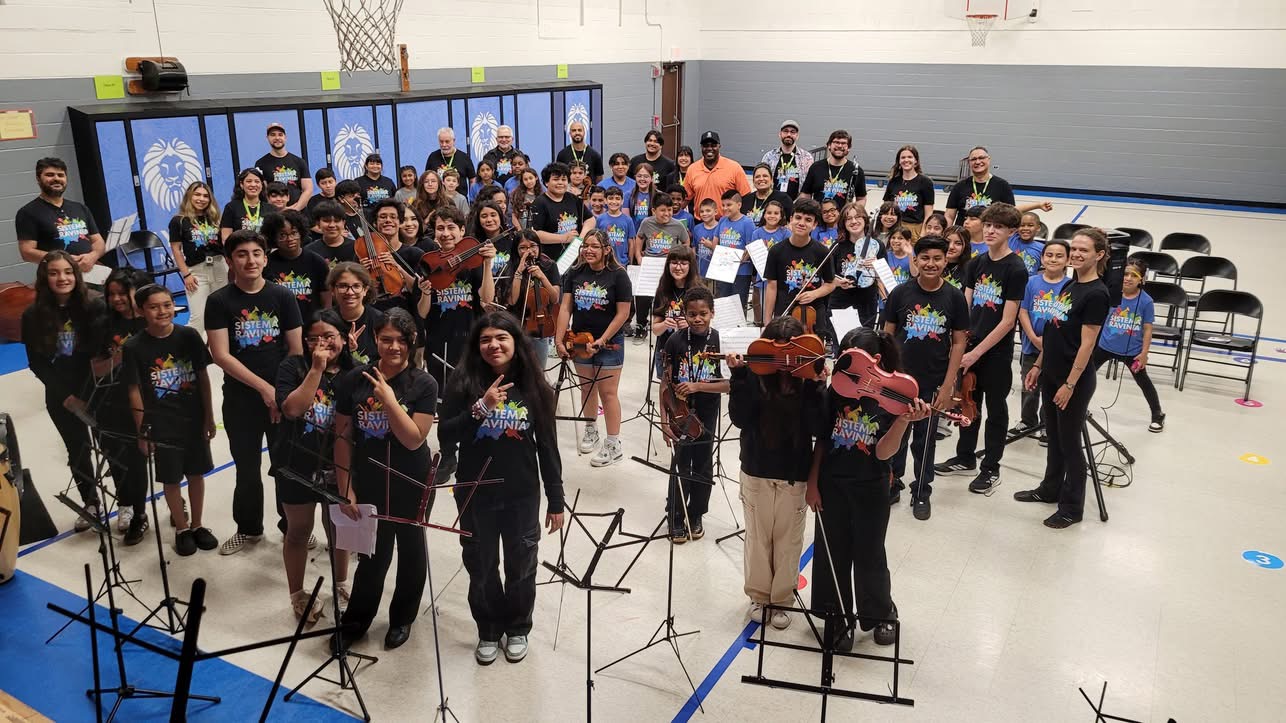
Photo: Sistema Ravinia.
As Sistema Ravinia prepared for in-person learning after the pandemic lockdowns, I attended a Zoom meeting with other incoming high school freshmen, most of whom were good friends. A manager asked us, “This is the first time we’ve had high school students in our program. What would you guys like to see happen?”
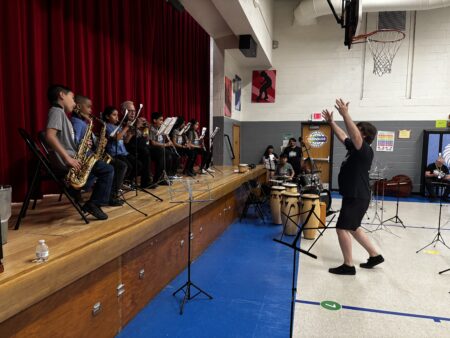
My peers and I still wanted to make music together. As we all attended different schools at the time, Sistema Ravinia was the place where we could catch up and improve our musical skills. We all decided—and were given the opportunity—to continue the journey by creating the Sistema Ravinia Honors Ensemble, a new ensemble in which high school and outstanding middle school students played advanced orchestral music and explored genres like jazz and chamber music. We met once a week and performed at Ravinia’s major concerts, filling in for the younger ensembles when needed.
My peers and I formed strong bonds during those early years in the Honors Ensemble, with many of us realizing we wanted to continue our musical pursuits in college. But so few of us knew where to start, or even what questions to ask. As a child of immigrant parents, I understood the challenges faced by first-generation, low-income students of color in accessing these resources. But I’d been fortunate, having received access to college preparation programs both in and outside of my school. I shared all the handouts, websites, links, and whatever else I received, in an effort to make the college application process less overwhelming for others.
By the time I graduated in 2024, I’d already begun advocating for college preparatory support for Ravinia students. Happily, my administrators listened, and we began to create what is now The Pathway, a high school honors program where students are introduced to college preparatory topics—whether or not they want to pursue music in college—while continuing to advance their instrumental skills, experiment with genres like jazz and mariachi, and step into teaching roles.
Creating The Pathway was a collaborative effort. During my first college semester, I frequently met over Zoom with my manager, Jo Ann, and our Program Director, Isaac, to discuss what the program could be. Besides making time to brainstorm a few times per month, they helped me acquire the tools, equipment, and insight I needed. That spring, I was invited to give a presentation on the college research and application processes to Ravinia Honors students. At first, many did not engage with the material; they didn’t know me and I didn’t have their trust. I was grateful for my administrators that day: they filled in the gaps, encouraging modest student participation by sharing their own experiences (and, occasionally, some tech support).
I left that session feeling like I’d failed the students. But soon after, Ravinia hired me as a summer intern—the first time an alum came back to work for the organization.

That summer, The Pathway took off in earnest. Finally, I had a chance to really get to know the students. I learned what the younger high school students are currently interested in; I learned what the older kids want to pursue after graduating. High school students don’t always know what they don’t know, or even which questions to ask. I’d felt that same uncertainty myself. But it helps to have a mentor who doesn’t look like your instructors—someone not much older than you, who might have a keener sense of what might give you relief. Once we got to know each other better, participation and engagement drastically increased.
So, what does The Pathway look like today? The initiative has been absorbed into Ravinia’s regular programming; once a week, upperclassmen in the Honors Ensemble learn about various types of higher education institutions and how to apply to them, the basics of financial aid, and how to craft a resume, while working on “studio masterclass performances.” Our goal is to empower them and help them to feel safe asking questions.
There have been other fun ripple effects. The program’s success inspired staff to hire outstanding Honors Ensemble musicians to serve as Instructional Assistants for Ravinia’s youngest players. This laddered mentorship program helps all of us know each other better. On a personal level, I now aspire to become a college counselor down the line, building off of my experience at Ravinia.
Community art programs everywhere must remember their unique power to connect with and support their students, even about topics that fall outside of their expertise. Recent graduates have much to offer: though we are no longer in the organization, we keep a foot in both worlds, bridging the huge gap between childhood and adulthood. I’m grateful to the Ravinia staff for encouraging me to fortify that bridge, and I hope The Pathway can do the same for students in the future.
Related Content

Europe, Events/Performances, Gather Together, the world ensemble
Students from Bosnia and Herzegovina, Croatia, and Serbia Perform Together
Patrick Scafidi

Collaborations, Europe, Gather Together, Latin America, Professional Development, Teaching & Learning, the world ensemble
Teachers from Mexico and Germany Learn Together
Patrick Scafidi
Africa, Events/Performances, Performance, Strings, Teaching & Learning, the world ensemble
Youth Orchestra of Namibia News
Patrick Scafidi


