

The NBYO Had Never Sent a Student to the Royal College of Music. Now They’re Sending Two.
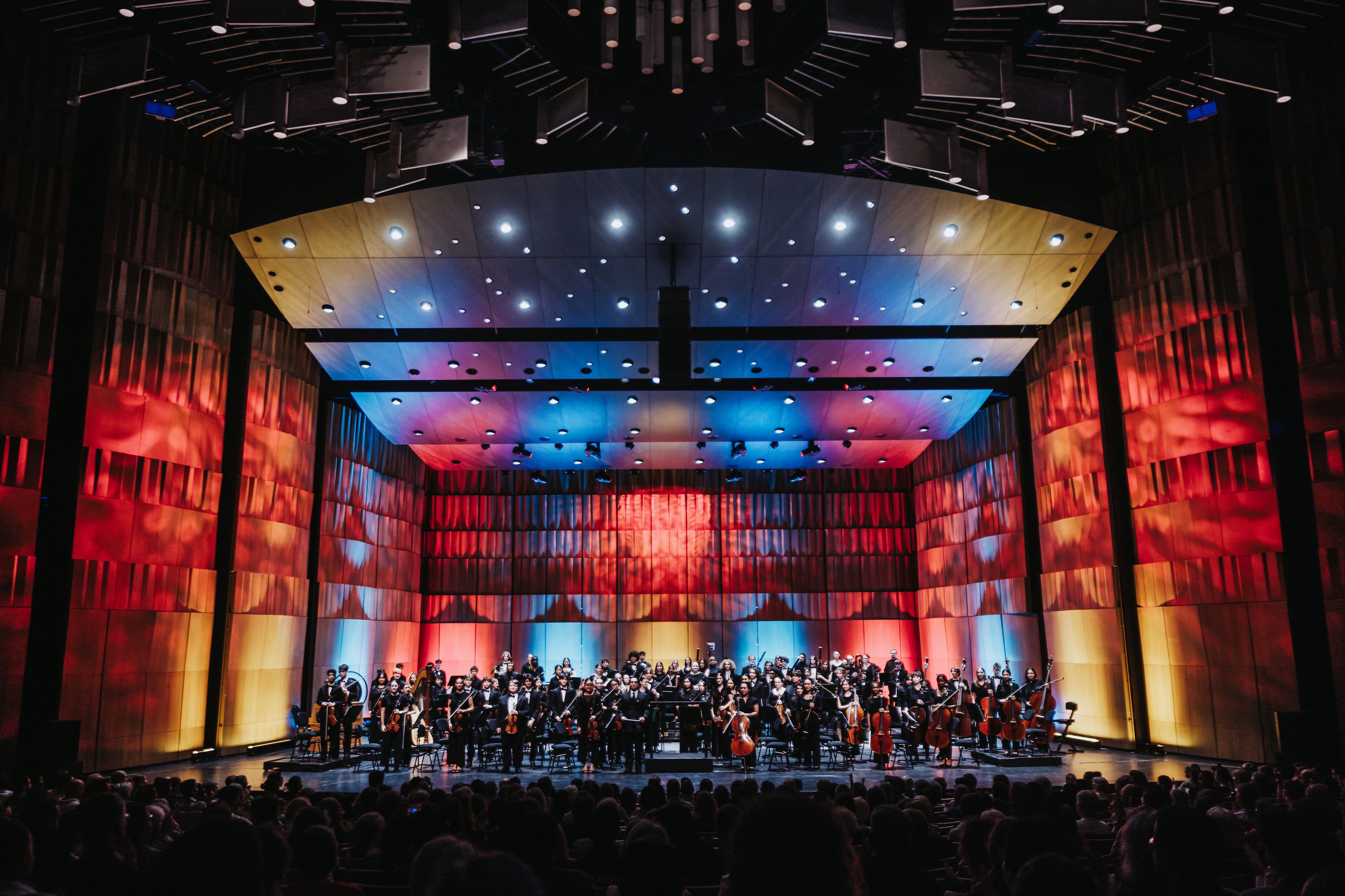
The NBYO performs Mahler 1 at the National Arts Centre in Ottawa, 2025. Photo: Curtis Perry.
In its 60 years of existence, the New Brunswick Youth Orchestra (NBYO)—Canada’s first provincial orchestra—has celebrated many a milestone. This year, there’s a new kind of success to celebrate: two of its graduating seniors have been accepted into London’s Royal College of Music.
The Royal College has never accepted an NBYO player before, let alone two. This is relatively rare for programs that value social-emotional outcomes as much or more than musical ones. But for the students involved, those social-emotional outcomes played a critical role in their matriculation, clarifying the value of a movement that builds arts-and-community pipelines traceable back to students’ earliest years. For the Youth Orchestra, that line leads to Sistema New Brunswick, an NBYO program for young players that began in 2009.
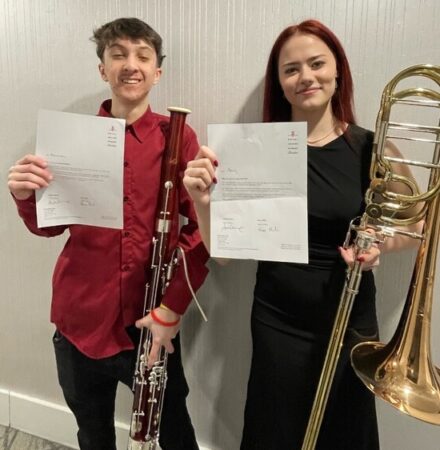
Alexander Urbina and Amy Robichaud did not grow up together. In fact, they’re relatively new friends. Amy is a Sistema NB lifer; a bass trombonist, she started in the program at in the fourth grade alongside her younger sister Dayna. “The teachers of Sistema NB came to my school and presented the instruments. I thought it was really cool,” she says. “And then I found out that it was free child care, and I thought I’d help my mom out, and we’d get to play the instruments.” Just two years later, Amy was accepted into the NBYO as a sixth grader.
Alex joined much later. As in, under a year ago. He moved to Canada from Mérida, Venezuela in August 2025 with his parents, who became teachers at Sistema NB when he became part of the NBYO. Alex had been playing for years, developing his skills in Venezuela’s El Sistema, before joining the NBYO as principal bassoon.
“It was difficult for me, because I don’t speak English. But I tried to familiarize myself with everyone,” he says. “[At NBYO], the work is similar to my experience in Venezuela. It’s hard. We work together for many, many hours, and we work on a professional level.”
There is alchemy involved in NBYO’s move from no Royal College alumni to two, simultaneously. One factor stands out: a maestro who believes in his players. NBYO conductor Tony Delgado, a Caracas native, once planned to attend university at London’s Royal Academy of Music (just a few blocks away from the Royal College), but was hindered by rising tuition costs.
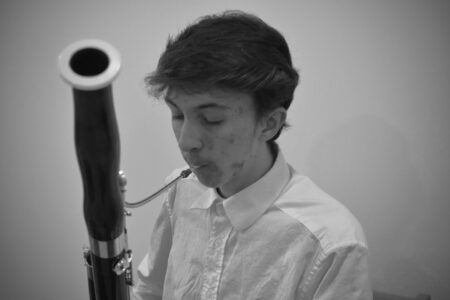
“I always wanted to go to the Royal College, anyway,” he says, laughing. When the Royal College approached the NBYO about potential applicants, Tony was eager to help; Alex identifies Tony as the person who gave him the idea to apply. “Alex was excited about the idea,” Tony continues, “and we started thinking about the audition and paperwork right away.”
Amy needed a different sort of motivation. “I was going to leave NBYO at the beginning of this year, to join the army. I thought it’d be a good path, to get disciplined and learn new things. But Tony said, ‘Amy, you’re almost at the finish line. You’ve been doing this for so long; you need to continue like you’re about to win, like you’re about to get your medal.’”
These are crucial moments in the student/mentor relationship: push-pull, speak-listen, play-rest. The maestro pointed out an opportunity, trusting his students’ years of collective music-making to do the rest. And both of them lit up.
Auditions to top-level music conservatories are never easy. “My mouth was so dry, I had to stop my audition for a minute, right before the cadenza, to drink some water,” says Amy. A decision like that reflects a young player who has been empowered to follow her instincts. “Tony kept reminding me that I was doing the audition for fun,” she adds, “and that was really helpful.” Along with Tony, she credits trombonist and NBYO instructor Jim Tranquilla for this feeling; his family hosted Amy as she and Alex prepared to travel to Toronto for the second round of auditions.
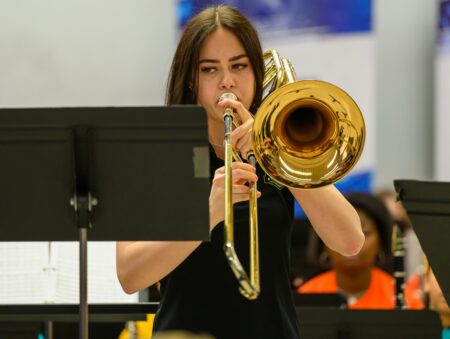
Both Alex and Amy were accepted soon after their second auditions. Alex says that, despite preparing intensely with the maestro, he “couldn’t believe it” when he got in. He called his mother immediately. Amy did the same thing—but not before folding up her acceptance letter “like a crazy person…You don’t fold the acceptance page to the Royal College!”
For Alex and Amy, there is much to look forward to. Both students are excited about new rigors, more personalized instruction, and new ensembles (Amy plans to audition for the Jazz Orchestra).
For Maestro Delgado, excitement springs anew with every lesson he teaches, no matter who is learning. “I believe we have many different ways to reach excellence,” he says. “It doesn’t matter if you can only play a whole note—do your best with your whole note. It doesn’t matter if you play the triangle. You make sure to play it right on time.”
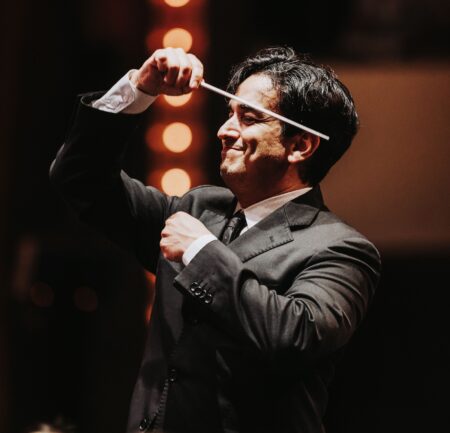
However, as we all know, it takes a long time to learn to play an instrument well. “There’s no way that today you are given an instrument and tomorrow you become a virtuoso. It takes years of practice; it’s a step-by-step kind of learning. That’s part of what our students take with them, from our program.” And that, he says, can be a critical corrective to the instant-gratification modes of phones and social media.
That’s useful no matter where your music-playing leads you, and students at all levels feel the truth of it. “I only have to show them,” says Maestro Delgado, “that when you know how to play better, you have more fun.”
Contenido relacionado
All Regions, Collaborations, Community Building, Events/Performances, Gather Together, News and Resources, Professional Development, Scotland
Compelling New Research in Scotland
Patrick Scafidi
Africa, All Regions, Collaborations, Community Building, Events/Performances, Gather Together, News and Resources, Research
Mapping Social Impact Across Africa
Patrick Scafidi
Africa, Community Building, Featured, Program Design, South Africa, Teaching & Learning
In South Africa, a Marimba Band Moves with the Music
Patrick Scafidi
All Regions, Collaborations, Community Building, Events/Performances, Gather Together, News and Resources, Professional Development
Inspirational Speech: “We are the Medicine”
Patrick Scafidi


