


EDITORIAL
Playing in the Same Key: Aligning Purpose and Practice for Students
“What’s the biggest thing keeping you up at night, as a leader or as a teaching artist?”
When Nikoletta Polydorou, founder of Sistema Cyprus, recently posed this question to music-for-social-action leaders and teaching artists across different countries and contexts, one concern surfaced repeatedly: when a program’s purpose isn’t clear, and collectively owned, the learning is less focused and effective.
When adults are misaligned, working toward different objectives, young people receive mixed messages. Energy is spent reconciling contradictions rather than making progress. Funders become unsure what they are supporting. Teams work hard—but not always in the same direction.
Alignment is not a fixed state; it’s a continuous re-calibration. Team members need to keep checking in with one another, to make sure they are working “in harmony.” Here are five ideas to encourage program teams to play in the same key.
- From Music to Mission
“We wish we had time to think about the whole range of student outcomes. But we need all our available time with our students for working on repertoire and preparing for performances.”

It’s a familiar tension. But musical learning is not separate from social mission; it is where that mission is most effectively experienced by our students.
Juan Carlos Maggiorani, Artistic Director of Orquestra Geração, often says: “The only ‘wrong’ method is when everyone in the orchestra is doing something different.” In rehearsal, he invites students to name various possible intentions for a piece of music—a particular sound, emotion, or story—and to test various ideas and then commit to one. Beyond artistic coherence, this creates stability and shared direction for the students.
Can we, as organizations, practice the same discipline? Can a program’s team come together regularly to ask one another: What student outcomes are we trying to support? Why do they matter? How will we recognize them in practice? Alignment begins when these questions are explored and answered together.
- Head, Heart, Hands
This is a simple lens for teams new to thinking about student outcomes. Another way to put it is: “Thinking, feeling, and doing.”
Together with your teammates, imagine a young person leaving your program at age 18, and ask how the program has effected positive change for that young person:
- What is stronger about their thinking?
- In what ways have their feelings of self-esteem, empathy, or courage grown?
- What can they now do—lead, collaborate, persist, excel musically—that they could not do before?
As you gather responses, notice patterns and divergences. Alignment grows where cross-purposes shrink. When teams can name and agree on what students should carry forward when they leave us, language sharpens and decisions become clearer.
- Tuning In, Agreeing On
Before playing together, an ensemble tunes. Yet many program leader/teaching artist teams begin new terms without the equivalent moment of alignment. We can use the periods between teaching terms intentionally for this purpose.
For instance, here’s something AIM has tried recently. Invite colleagues to think deeply about their students and the world they are growing into, asking questions such as:
- What do you observe about the world young people are navigating?
- Beyond instrumental instruction, what is music preparing them for?
- If we are successful, what kinds of things will students think, feel, and do differently?
If you begin there, before discussing program logistics for the term, everyone can tune into their own intrinsic motivations—and then, together, identify patterns and phrases you want to hold onto as a team, as the year unfolds.
For an even more adventurous step, consider the team at Project Guri, Brazil’s largest social music program. After participating in AIM’s “Fire Up” action research initiative, says Education Director Giuliana Frozoni, they decided to include musical jams at their regular meetings—getting musically and pedagogically in tune before stepping into their classrooms.
- Performance as a Laboratory
Performance pressure can narrow focus. But can it also sharpen that focus? In my experience, shared values become clearest when we test them inside real constraints. Perhaps performance can function as that kind of constraint: a fixed short-term goal within which to practice alignment.
At the Trillargento project in Genoa, Italy, the team recently used a three-month performance cycle as an action research experiment. They agreed on specific shifts they wanted to see in students (greater agency, more shared responsibility) and named observable indicators (shifts in rehearsal language, rotating leadership moments, clearer peer feedback). Students tracked evidence. Teachers reviewed it together and adjusted practice.
The performance would have happened anyway; what changed was the clarity of intention around student outcomes. According to teaching artist Matteo Guerreri, the performance was “a perfect summary of the agency and community they have built in just a few months. We were so moved, you can’t imagine.”
- Are we all in the same key?
At AIM, an organization that works across countries and continents, we have a clear Teaching and Learning framework for student outcomes in the music room, codifying our essential principles.
Similarly, the international Superar network has a shared handbook that seeks to unite programs across Europe around “Positive & Proactive Pedagogy.” Teachers translate those principles into daily practice—designing strategies, tracking growth in students’ team skills, and sharing learning across contexts.
As AIM’s founder, I need to consistently ask: Are we aiming at these desired outcomes for team members as well? Are we making sure to prioritize growth mindset, wellbeing, and creativity for our teaching artists and administrators?
Conclusion
Whether you are a teacher, administrator, or leader, you have influence. If team alignment is keeping you up at night, don’t wait for a strategic planning cycle. Start with the next rehearsal, the next concert. Commit to what matters most for students right now. Start small enough that alignment becomes action.
Then, decide which student development outcomes matter most—and how you will recognize them in practice. Students thrive when the adults around them are working in tune with one another. Together, you might just find a new key that really works for your students.
Related Content
All Regions, Collaborations, Community Building, Events/Performances, Gather Together, News and Resources, Professional Development
Students in the League of American Orchestras
Patrick Scafidi
All Regions, Collaborations, Community Building, Events/Performances, Gather Together, News and Resources, Professional Development
Apply for ESUSA’s Youth Leadership Institute
Patrick Scafidi
All Regions, Collaborations, Community Building, Events/Performances, Gather Together, News and Resources, Professional Development
Creative Economy Career Pathways for Youth
Patrick Scafidi
Collaborations, Community Building, Europe, Featured, Gather Together, Italy, Program Design, Teaching & Learning
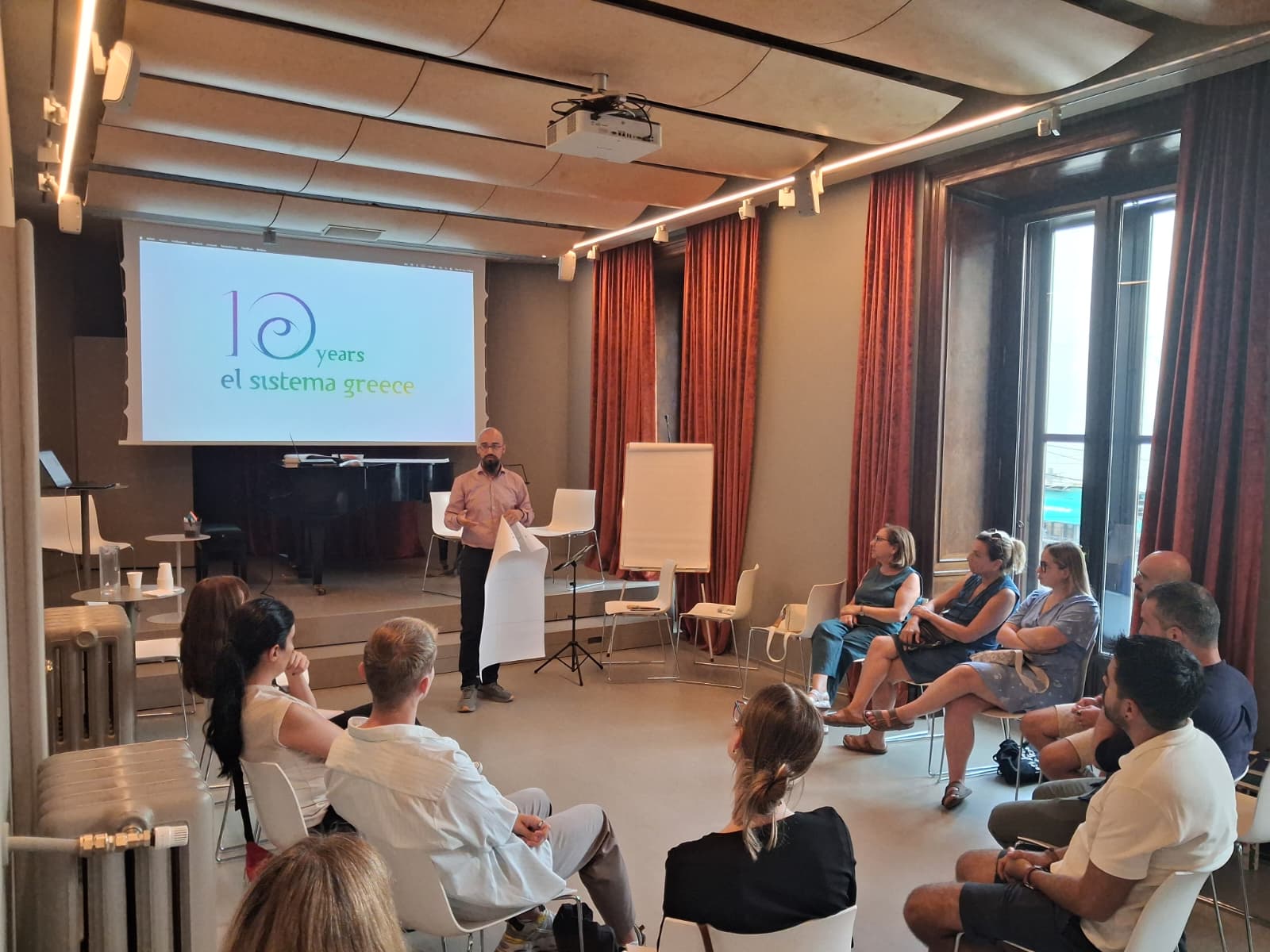
A Living Network Meets in Milan
Patrick Scafidi


