

Concerts for Babies Transform Stages Into Communities
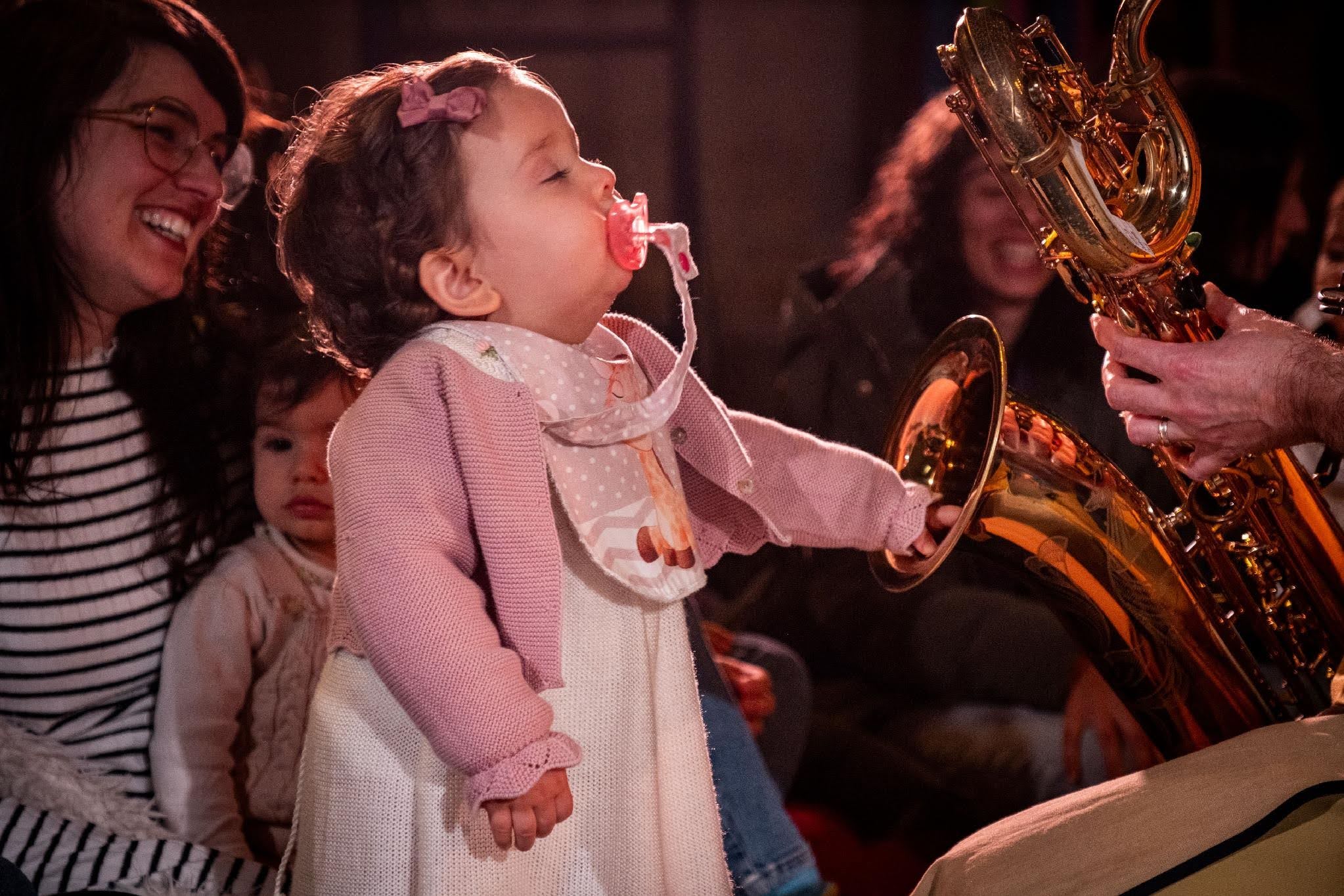
Photo: Concerts for Babies.
In my small Portuguese village of Pousos, between the giant waves of Nazaré and the Shrine of Fátima, we had a community band. I joined at age 8, playing flugelhorn. I’m forever grateful for this decision, which launched a life in music. But it wasn’t until years later, when I served as the director of several conservatories, that I began asking why it took me so long to get started.
Feeling that music education should not be delayed, I initiated a project called “Berço das Artes” (Cradle of Arts), offering music, theater, and dance classes for children from birth through age six. During those first classes, mothers and early childhood educators asked me: “You say that babies should listen to high-quality music performed live by skilled artists, but it’s forbidden to bring a baby into a concert hall anywhere in Europe. So where can a baby listen to that music?” The answer to this question was: “Let’s do it ourselves.” On November 28, 1998, Concerts for Babies—which today has traveled from Brazil to China, from Barcelona to Paris, and from Lisbon to Stockholm—made its debut in the city of Leiria.
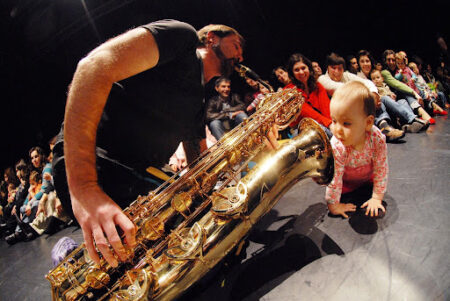
When I first invited fellow teachers to perform in these concerts, they sent their students, feeling it wasn’t necessary to spend their own valuable time on babies. I had to show my colleagues why we needed high-level teachers performing—so I conducted several workshops with babies, testing whether a six-month-old can feel the difference between a skilled musician and a student. Their attention span, breathing pauses, amount of drool, and eye focus made the answer very clear to anyone who witnessed those early exercises, which featured skilled teachers and less-experienced students side by side.
Babies are like the rest of us: even before the music is presented to them, they feel the performer standing right in front of them. It is the emotion and pure delight of the performer that the baby perceives first and foremost.
But what about repertoire? After much experimentation and deliberation, our essential criterion became: the musician must play the music they love most. Contemporary? Electronic? Repetitive minimalism? Yes. In these early years, insights emerged. Mozart or Stravinsky? They like both, but babies focus more on Stravinsky—it’s less predictable and offers more contrasts. High-pitched or low-pitched instruments? They like and need to hear everything, but get more upset with high-pitched sounds. Piano or accordion? Any instrument that moves and is held in someone’s lap arouses more interest than a large, black, stationary object in the middle of a stage, with a musician who can hardly play while looking the baby in the eye. Wind instruments or strings? Interestingly, wind instruments seem to spark more interest (air, breathing, even intrauterine memories may all play a part). Voice or instrument? This is a big question, still hotly debated. In my experience, “instrument” is the baby’s answer.
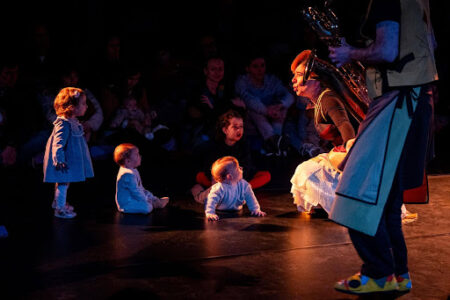
Equally important is how we orient our performance space. We arrange an arena-style stage, where babies and their families look at one another while the artists serve as a bridge between them. About 40 to 60 babies, from newborn to 36 months, sit with their families while six to eight musicians and a dancer perform. Sometimes we have a symphony orchestra. We offer a new program every month, always featuring one or more guest soloists; since our team comes from the classical world, we invite specialized musicians for jazz, early music, electronic music, or world music. Monteverdi and J. S. Bach are featured in all of our programs.
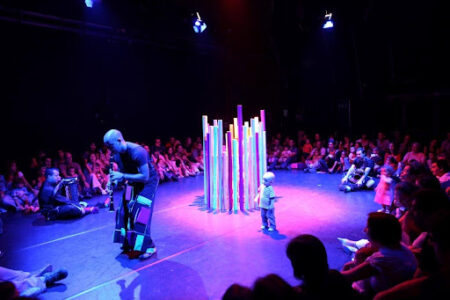
Our aim isn’t to prepare babies to become a “real” audience later on, or to teach them how to enjoy the art of sound when they grow up. Neither do we aim to ensure that major symphony orchestras renew their audiences and secure their future. Concerts for Babies are simply concerts, for today’s audience, here and now.
In the early years, along with the responsibility of performing in major orchestras’ concert halls, our greatest concern was artistic quality: arranging a Mendelssohn concert that only features an accordion trio, a baritone saxophone, and a soprano saxophone; selecting renowned soloists willing to perform with such a lineup for an audience of babies; ensuring our concerts were not placed in children’s programs or educational services but rather in programming for the general public. It has been a long and arduous journey, one that continues.
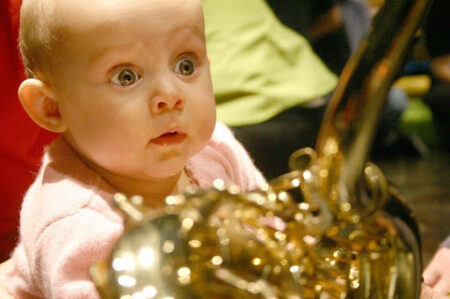
But the day finally came when adults without babies began attending Concerts for Babies. Programmers and artistic directors invited us, arguing that the audience had declared the Concerts for Babies to be their best “Healing Ritual.” In some cases, grandparents and great-grandparents attended monthly with their young ones, visiting venues where we earned the status of a resident company.
That’s when we realized: babies, in addition to being experts at learning, are the human beings with the greatest power to change the world.
We adults will do anything to ensure a future for these fragile, delicate, yet powerful beings. We reach the highest level of openness and care toward another when we hold a baby in our arms. Our ability to care for others and thus form community is often acquired through our roles as caregivers to babies. These encounters on the concert stage offer adults and children, professionals and music-lovers alike, the opportunity to recognize in music a space for being, for contemplation, for shared connection, and for a collective commitment to beauty.
In this meeting place, people big and small share in celebrating music and life itself—a simple act that promotes a more sensitive, compassionate, and peaceful community. That is an obligation for all of us, but perhaps for artists most of all.
Related Content
All Regions, Asia, Asia/Oceania, Collaborations, Community Building, Europe, Events/Performances, Gather Together, Latin America, News and Resources, North America, Professional Development
Cities Celebrate Bach
Patrick Scafidi
All Regions, Collaborations, Community Building, Events/Performances, Gather Together, News and Resources, North America, Professional Development
Free Report: Complexity Thinking is Changing Music Education
Patrick Scafidi
All Regions, Collaborations, Community Building, Europe, Events/Performances, Gather Together, News and Resources, Professional Development
Open Call for Europe-Based Creatives: PartArt4OW
Michael Gutierrez
All Regions, Collaborations, Community Building, Events/Performances, Gather Together, Professional Development
Free Guide for Artists Working in Humanitarian Care
Michael Gutierrez


