Artista de la Enseñanza



From an Empty Airport to Downtown Berlin, a Music Program Still Soars
Tricia Tunstall, Co-founder and Advisory Editor, The Ensemble
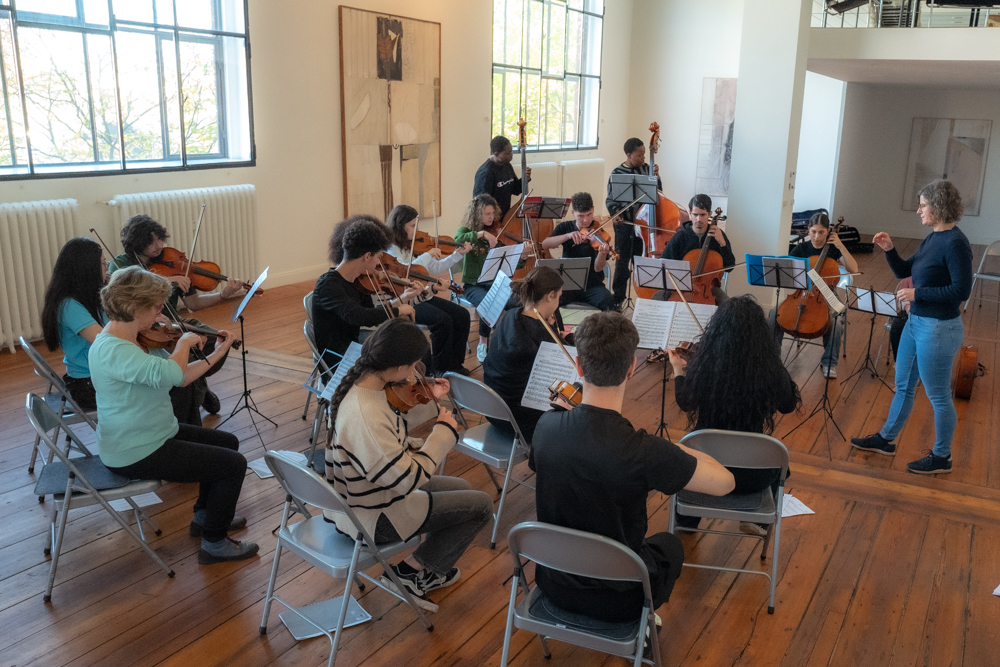
In a white-walled, sunlit room with arched ceilings, an El Sistema-inspired youth orchestra plays Gustav Mahler’s well-known “Bruder Martin” (“Frère Jacques”) theme—the third movement of his Symphony No. 1—under the direction of teaching artist/conductor Leila Weber. The two double bass players are six feet tall, around sixteen years old; the youngest cellist might be seven, and this is the second time she’s held a cello. Embedded among the second violins is a guest teaching artist from an orchestra based 500 miles away.
EDITORIAL
A Space to Be: What One Classroom Taught Me about Art, Listening, and Inclusion
Giovanni Acquilino, 2025 Cohort Member, Global Leaders Institute
This was a Mus-e session at a public primary school in Genova, Italy, in a room filled with light, nervous energy and about 20 children in motion. Some moved eagerly. Some hung back. Some followed Olivia Giovannini, the teaching artist leading the session. Others wandered in their own rhythm. Throughout it all, something subtle was happening: no one was being excluded.
Perspectivas estéticas desde el punto de vista musical
Chloë Kline, Community MusicWorks; Directora de Educación y músico residente
El concepto de arte como acto de revolución -como medio para fomentar el cambio, estimular la conciencia e imaginar nuevas realidades- es tan antiguo como el propio arte. Por ejemplo, los tambores hacían sonar a otros invisibles, y las imágenes de las cuevas exploraban las relaciones de los individuos con especies animales conocidas y desconocidas.


